




The Healthspan team is very personable and knowledgeable. They explain all of my biomarker results and how to achieve my longevity goals alongside my protocol.
Enclomiphene
Enclomiphene is an oral medication that helps the body produce testosterone naturally by restoring communication between the brain and the testes. This supports energy, strength, mood, and mental clarity while preserving fertility.
Testosterone is regulated by a feedback loop between the brain and the testes (the HPG axis), which can become suppressed with age. Enclomiphene helps restore this signaling, allowing the testes to produce testosterone naturally while maintaining normal hormonal rhythms.
Improved testosterone levels enhance insulin sensitivity, reduce visceral fat accumulation, and balance lipid metabolism—key defenses against metabolic syndrome and age-related decline.
Unlike testosterone replacement therapy (TRT), which suppresses testicular signaling, enclomiphene works upstream in the hormonal pathway. This allows testosterone levels to rise without shutting down sperm production, supporting fertility, testicular function, and long-term hormonal balance.


Healthspan Patients Get More
Clinically-driven enclomiphene therapy, rooted in rigorous endocrine science
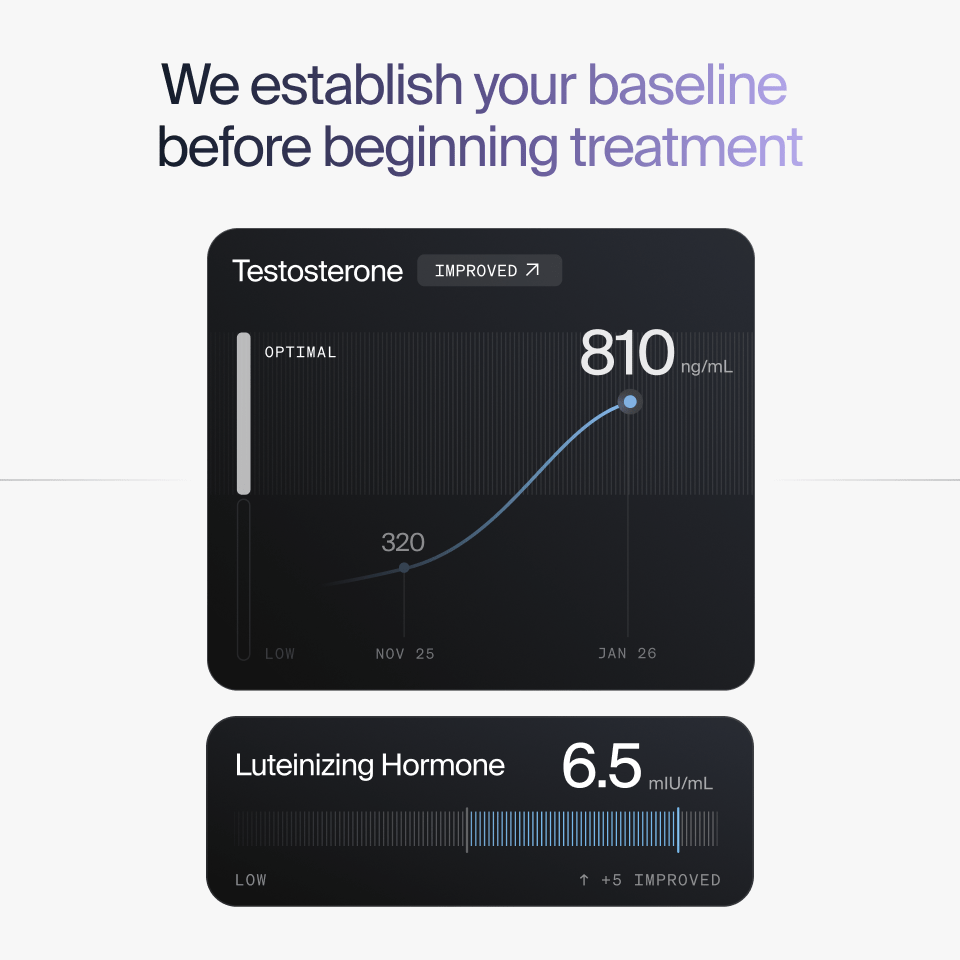
Full hormone panel to assess LH, FSH, T, SHBG, and root signaling
Enclomiphene protocol that boosts endogenous testosterone via the HPG axis
Ongoing tracking of labs, mood, energy, libido, and performance
Data-driven dose adjustments based on biomarker shifts and clinical response

BASELINE & MONITORING LABS
Labs designed to guide enclomiphene therapy

These biomarkers evaluate how well your hormonal signaling system is functioning, including pituitary output and testosterone production. They help determine whether enclomiphene is appropriate and guide personalized dosing.
These labs assess overall organ function, blood health, and metabolic stability to ensure hormone therapy can be prescribed safely and monitored over time.
Cholesterol and lipid markers provide insight into cardiovascular risk and metabolic health, which are closely influenced by testosterone levels and long-term hormone balance.
PSA screening helps establish a baseline for prostate health and supports safe monitoring when optimizing testosterone production.

HPG Axis Reactivation
Stimulates the brain to release key hormones (LH and FSH), signaling the testes to resume natural testosterone production.

Estrogen Signal Blocker
Reduces estrogen’s suppressive signal in the brain, allowing normal testosterone signaling to restart.

Mitochondrial Biogenesis
By increasing testosterone, supports cellular energy production and resilience, helping improve overall vitality.

Insulin Signal Support
Improves the body’s response to insulin, helping reduce abdominal fat and support healthy blood sugar control.

Inflammation Reduction
Helps lower chronic, low-grade inflammation linked to excess fat and metabolic aging.

Neurotrophic Support
Supports brain health by promoting factors involved in mood, focus, and cognitive resilience.
Going Deeper
Cellular pathways are roads to peak performance

AMPK (Energy-Sensing Pathway)
Promotes mitophagy to remove damaged mitochondria, enhancing energy production and metabolic efficiency.

Anabolic Maintenance
Maintains physiologic testosterone levels that support controlled mTOR signaling, preserving lean mass and bone strength without driving chronic anabolic overstimulation.

Sirtuin / NAD⁺ Axis
Enhances mitochondrial output and NAD⁺ turnover, activating SIRT1 and SIRT3 pathways that regulate DNA repair, metabolic stability, and cellular resilience.

PGC-1α
Stimulates PGC-1α–driven mitochondrial enzyme expression, increasing oxidative capacity and ATP production while improving cellular endurance and recovery.

NF-κB
Reduces visceral adiposity and insulin resistance, lowering NF-κB activity and inflammatory cytokines to support metabolic balance and systemic longevity.

BDNF Axis
Balances androgen–estrogen signaling to elevate BDNF expression, enhancing neuroplasticity, cognitive performance, and long-term stress resilience.
AMPK (Energy-Sensing Pathway)
Promotes mitophagy to remove damaged mitochondria, enhancing energy production and metabolic efficiency.
Anabolic Maintenance
Maintains physiologic testosterone levels that support controlled mTOR signaling, preserving lean mass and bone strength without driving chronic anabolic overstimulation.
Sirtuin / NAD⁺ Axis
Enhances mitochondrial output and NAD⁺ turnover, activating SIRT1 and SIRT3 pathways that regulate DNA repair, metabolic stability, and cellular resilience.
PGC-1α
Stimulates PGC-1α–driven mitochondrial enzyme expression, increasing oxidative capacity and ATP production while improving cellular endurance and recovery.
NF-κB
Reduces visceral adiposity and insulin resistance, lowering NF-κB activity and inflammatory cytokines to support metabolic balance and systemic longevity.
BDNF Axis
Balances androgen–estrogen signaling to elevate BDNF expression, enhancing neuroplasticity, cognitive performance, and long-term stress resilience.
AMPK (Energy-Sensing Pathway)
Promotes mitophagy to remove damaged mitochondria, enhancing energy production and metabolic efficiency.
Anabolic Maintenance
Maintains physiologic testosterone levels that support controlled mTOR signaling, preserving lean mass and bone strength without driving chronic anabolic overstimulation.
Sirtuin / NAD⁺ Axis
Enhances mitochondrial output and NAD⁺ turnover, activating SIRT1 and SIRT3 pathways that regulate DNA repair, metabolic stability, and cellular resilience.
PGC-1α
Stimulates PGC-1α–driven mitochondrial enzyme expression, increasing oxidative capacity and ATP production while improving cellular endurance and recovery.
NF-κB
Reduces visceral adiposity and insulin resistance, lowering NF-κB activity and inflammatory cytokines to support metabolic balance and systemic longevity.
BDNF Axis
Balances androgen–estrogen signaling to elevate BDNF expression, enhancing neuroplasticity, cognitive performance, and long-term stress resilience.
AMPK (Energy-Sensing Pathway)
Promotes mitophagy to remove damaged mitochondria, enhancing energy production and metabolic efficiency.
Anabolic Maintenance
Maintains physiologic testosterone levels that support controlled mTOR signaling, preserving lean mass and bone strength without driving chronic anabolic overstimulation.
Sirtuin / NAD⁺ Axis
Enhances mitochondrial output and NAD⁺ turnover, activating SIRT1 and SIRT3 pathways that regulate DNA repair, metabolic stability, and cellular resilience.
PGC-1α
Stimulates PGC-1α–driven mitochondrial enzyme expression, increasing oxidative capacity and ATP production while improving cellular endurance and recovery.
NF-κB
Reduces visceral adiposity and insulin resistance, lowering NF-κB activity and inflammatory cytokines to support metabolic balance and systemic longevity.
BDNF Axis
Balances androgen–estrogen signaling to elevate BDNF expression, enhancing neuroplasticity, cognitive performance, and long-term stress resilience.
1
st
digital longevity clinic
We pioneered modern longevity care, making it accessible to all.
4.9
★
patient satisfaction
Effective treatments and excellent service earns us loyal support.
20
+
avg. yrs of experience
The MDs and PhDs on our clinical and research teams are experts.
150
+
published works
Our team actively drives progress in aging research.
Reviews
411 reviews
Hear from our patients
Frequently asked questions
Enclomiphene works by restoring your body’s own testosterone production rather than supplying synthetic hormones. It supports the natural brain–testes signaling loop that produces testosterone and sperm, allowing your hormone levels to rise without shutting down fertility, testicular volume, or endogenous hormone rhythms. Traditional testosterone therapy replaces your own testosterone, which can suppress sperm production, shrink testicular tissue, create dependency, and lead to hormonal fluctuations. Enclomiphene gives you the benefits of higher testosterone while keeping your natural physiology intact.
Enclomiphene is designed for men and should not be used by women. Because it specifically stimulates the male hypothalamic–pituitary–gonadal axis, it is contraindicated in individuals assigned female at birth. Women do not benefit from this mechanism, and the medication has not been studied or approved for use in female hormone health.
Men commonly seek Enclomiphene for low energy, reduced libido, difficulty with focus or motivation, mood instability, reduced strength, increased body fat, or decreased morning erections. As testosterone levels rise naturally, patients often describe improvements in confidence, drive, sexual function, sleep, and metabolic health. Because Enclomiphene supports the body’s own hormone rhythm, men frequently notice steadier energy and fewer hormonal swings compared to traditional testosterone therapy.
Enclomiphene is usually taken once each morning, ideally with a meal, to align with the body’s natural testosterone rhythm. Most men begin treatment at 12.5 mg daily, with reassessment after three months based on labs and symptoms. Many patients feel shifts in energy, mood, and libido within the first one to two months. Improvements in muscle tone, body composition, cognitive clarity, and metabolic health typically continue to develop across three to six months as hormone levels stabilize.
Yes. Enclomiphene maintains and often improves fertility because it increases LH and FSH, the hormones responsible for sperm production. Unlike testosterone replacement, which commonly suppresses sperm count, Enclomiphene supports natural sperm development and testicular function. This makes it a preferred option for men who want to raise testosterone levels while trying to conceive or preserving future fertility.
Your care begins with baseline lab testing and an assessment of symptoms and goals. During the first month, most men complete a virtual check-in to evaluate early response. At the three-month mark, updated labs and an AMS symptom review help determine whether your dose should remain the same or be adjusted. By six months, testosterone signaling typically stabilizes, and long-term benefits become clearer. At twelve months, your provider will complete a comprehensive review to confirm whether treatment should continue, pause, or be modified.
Most men tolerate Enclomiphene well. Mild headaches, nausea, irritability, or acne can occur early in treatment. In rare cases, more serious symptoms such as blood clots or significant changes in hematocrit may appear, which is why routine blood work every three months is essential. If you develop sudden leg swelling, chest pain, trouble breathing, severe headache, or changes in vision, you should seek immediate medical care.
Enclomiphene is not appropriate for individuals assigned female at birth, or for men with significantly elevated hemoglobin or hematocrit. It should also be avoided by anyone with a known allergy to the medication. Men with certain clotting disorders, hormone-sensitive cancers, or high baseline LH may require an individualized treatment plan or alternative therapy.
Before beginning therapy, you’ll complete a full male hormone panel, a complete blood count to evaluate hemoglobin and hematocrit, and the AMS symptom questionnaire to establish your baseline. These allow your provider to confirm that treatment is safe, medically appropriate, and aligned with your goals before you begin.
No. Because Enclomiphene stimulates your natural hormone pathway rather than replacing testosterone, it does not suppress the body’s ability to produce hormones. If you stop treatment, your testosterone levels may gradually shift back toward baseline over time, but you will not experience the abrupt hormonal crash often associated with stopping TRT.
Enclomiphene works by restoring your body’s own testosterone production rather than supplying synthetic hormones. It supports the natural brain–testes signaling loop that produces testosterone and sperm, allowing your hormone levels to rise without shutting down fertility, testicular volume, or endogenous hormone rhythms. Traditional testosterone therapy replaces your own testosterone, which can suppress sperm production, shrink testicular tissue, create dependency, and lead to hormonal fluctuations. Enclomiphene gives you the benefits of higher testosterone while keeping your natural physiology intact.
Enclomiphene is designed for men and should not be used by women. Because it specifically stimulates the male hypothalamic–pituitary–gonadal axis, it is contraindicated in individuals assigned female at birth. Women do not benefit from this mechanism, and the medication has not been studied or approved for use in female hormone health.
Men commonly seek Enclomiphene for low energy, reduced libido, difficulty with focus or motivation, mood instability, reduced strength, increased body fat, or decreased morning erections. As testosterone levels rise naturally, patients often describe improvements in confidence, drive, sexual function, sleep, and metabolic health. Because Enclomiphene supports the body’s own hormone rhythm, men frequently notice steadier energy and fewer hormonal swings compared to traditional testosterone therapy.
Enclomiphene is usually taken once each morning, ideally with a meal, to align with the body’s natural testosterone rhythm. Most men begin treatment at 12.5 mg daily, with reassessment after three months based on labs and symptoms. Many patients feel shifts in energy, mood, and libido within the first one to two months. Improvements in muscle tone, body composition, cognitive clarity, and metabolic health typically continue to develop across three to six months as hormone levels stabilize.
Yes. Enclomiphene maintains and often improves fertility because it increases LH and FSH, the hormones responsible for sperm production. Unlike testosterone replacement, which commonly suppresses sperm count, Enclomiphene supports natural sperm development and testicular function. This makes it a preferred option for men who want to raise testosterone levels while trying to conceive or preserving future fertility.
Your care begins with baseline lab testing and an assessment of symptoms and goals. During the first month, most men complete a virtual check-in to evaluate early response. At the three-month mark, updated labs and an AMS symptom review help determine whether your dose should remain the same or be adjusted. By six months, testosterone signaling typically stabilizes, and long-term benefits become clearer. At twelve months, your provider will complete a comprehensive review to confirm whether treatment should continue, pause, or be modified.
Most men tolerate Enclomiphene well. Mild headaches, nausea, irritability, or acne can occur early in treatment. In rare cases, more serious symptoms such as blood clots or significant changes in hematocrit may appear, which is why routine blood work every three months is essential. If you develop sudden leg swelling, chest pain, trouble breathing, severe headache, or changes in vision, you should seek immediate medical care.
Enclomiphene is not appropriate for individuals assigned female at birth, or for men with significantly elevated hemoglobin or hematocrit. It should also be avoided by anyone with a known allergy to the medication. Men with certain clotting disorders, hormone-sensitive cancers, or high baseline LH may require an individualized treatment plan or alternative therapy.
Before beginning therapy, you’ll complete a full male hormone panel, a complete blood count to evaluate hemoglobin and hematocrit, and the AMS symptom questionnaire to establish your baseline. These allow your provider to confirm that treatment is safe, medically appropriate, and aligned with your goals before you begin.
No. Because Enclomiphene stimulates your natural hormone pathway rather than replacing testosterone, it does not suppress the body’s ability to produce hormones. If you stop treatment, your testosterone levels may gradually shift back toward baseline over time, but you will not experience the abrupt hormonal crash often associated with stopping TRT.