A Single Dose of Creatine Improved Cognition During Sleep Deprivation. The How Is More Interesting Than the What.
Prefer to listen? Hit play for a conversational, audio‑style summary of this article’s key points.
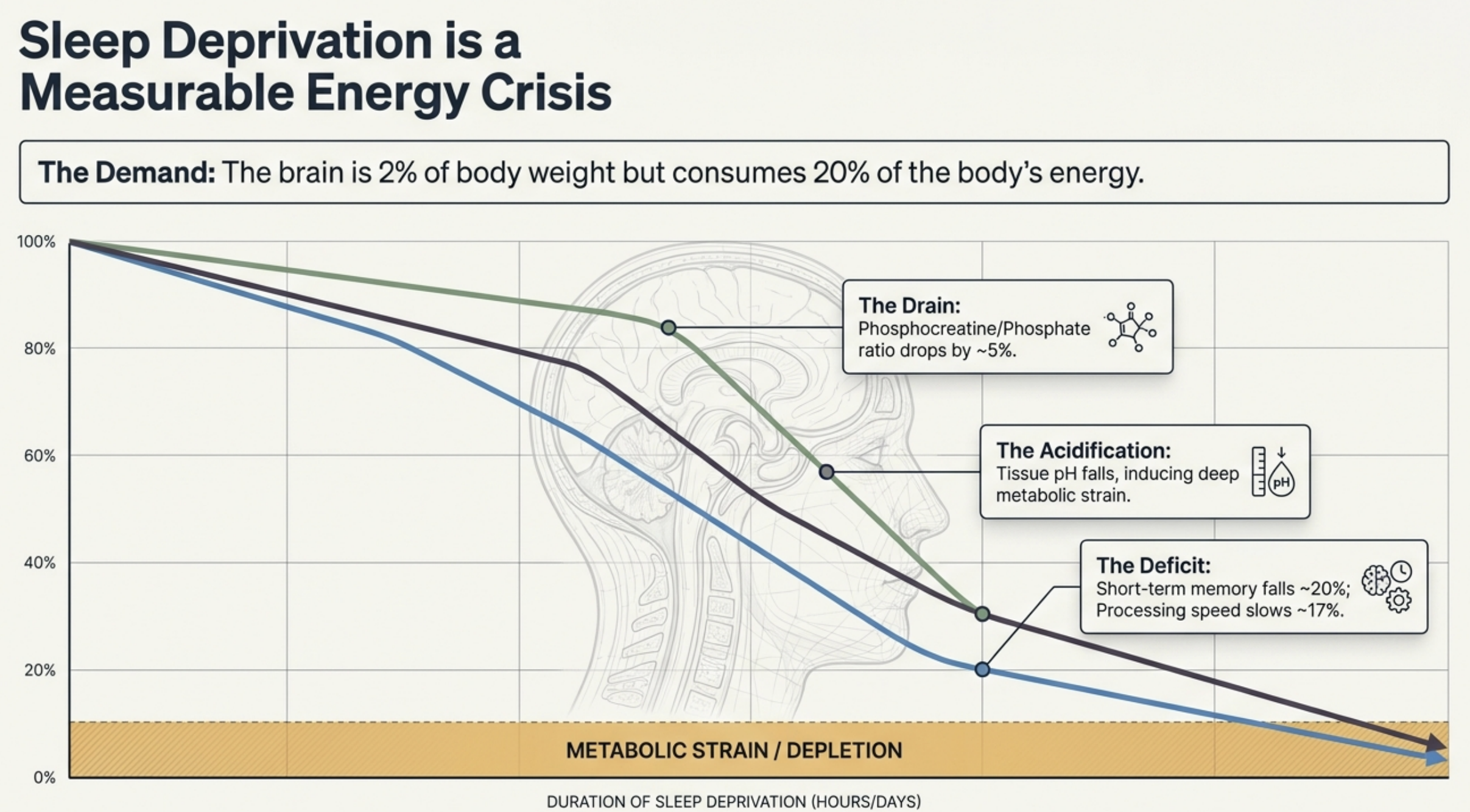
The brain runs on a buffered energy system, and sleep deprivation measurably drains it. The brain consumes about a fifth of the body's energy, and a sleepless night depletes its energy reserves in ways brain imaging can now capture directly. As the night wears on, the brain's charged energy reserve falls, its tissue grows more acidic, and cognitive performance declines in parallel. Sleep deprivation is, in part, a brain energy crisis.
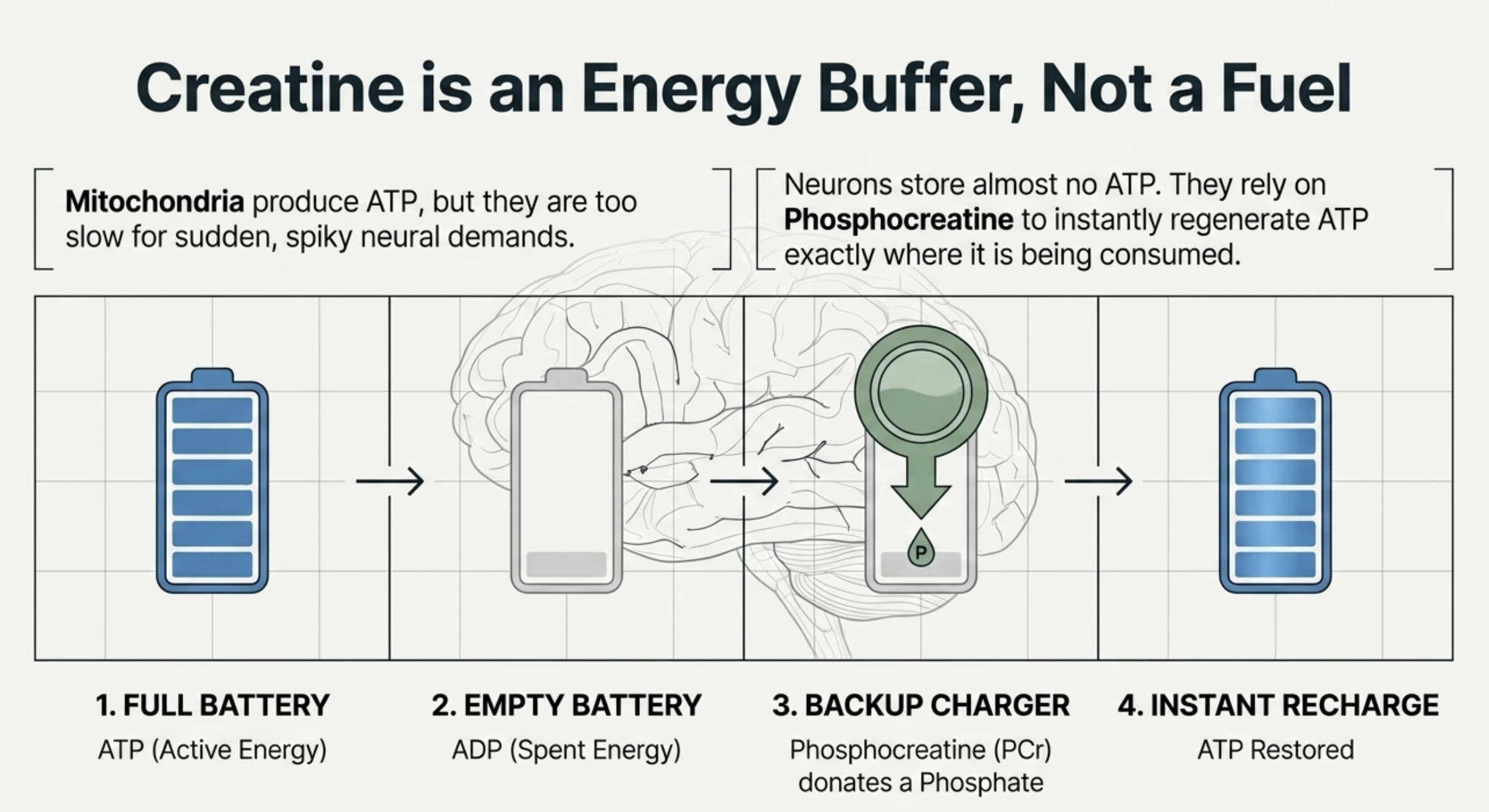
Creatine is not fuel; it is an energy buffer. Cells run on ATP but store very little of it. Creatine, held in the cell as phosphocreatine, acts as a rapid backup: when energy demand spikes and ATP is spent, phosphocreatine instantly regenerates it, faster than the mitochondria can. This is why creatine matters in muscle during bursts of effort, and, less appreciated, in the brain, where neurons fire in sudden, energy-hungry bursts.
A single dose of creatine improved cognition during sleep deprivation. In a rigorous double-blind crossover study of 15 healthy young adults, a single dose of creatine given during a night of sleep deprivation improved processing speed and memory versus placebo, with language-task processing speed nearly 30% faster and word memory about 10% better. The effects appeared within 3 to 4 hours, peaked around 4 hours, and lasted up to 9.
Creatine reached the brain far faster than the field believed possible. The established view was that raising brain creatine required weeks of daily supplementation, because the blood-brain barrier admits creatine slowly through a nearly-saturated transporter and the brain makes much of its own. Yet a single dose raised brain creatine measurably within hours. This is the study's most novel and surprising finding.
The likely reason is that a stressed brain becomes receptive to creatine. The authors propose that the sleep deprivation and cognitive load themselves opened the door. A depleted, acidic, hard-working brain may temporarily increase its capacity to pull in creatine, precisely when it most needs the energy buffer, provided abundant creatine is available in the blood. The stress and the supply had to coincide. This reframes the finding: it is not that a big dose forces creatine into any brain, but that a depleted brain becomes able to absorb it.
Creatine also prevented the sleep-deprivation drop in brain pH. Beyond refilling the energy reserve, creatine kept the brain's acidity closer to its rested baseline through the night. This suggests it was not merely adding energy but easing the underlying metabolic stress, keeping the brain's chemistry closer to normal.
The dose was very high and is not a template for everyday use. Participants received about 0.35 grams per kilogram in a single sitting, roughly 25 grams, many times a standard 3 to 5 gram serving. It was chosen to maximize brain uptake under study conditions, not as a usage recommendation, and large single doses can cause gastrointestinal distress in many people. Nothing in the study supports taking a megadose of creatine.
This was a small study of an extreme condition, not a study of aging or everyday cognition. Fifteen young healthy adults, one night of acute sleep deprivation. It says little directly about rested cognition, chronic sleep restriction, older adults, or long-term use. Its value is in illustrating a principle, not in providing a prescription.
The aging connection is a hypothesis grounded in the broader creatine literature, not a finding of this study. The aging brain, like the sleep-deprived one, tends to operate with a reduced energy margin as brain metabolism declines. Creatine is being actively investigated for cognitive aging, and the clearest cognitive signals have appeared in people who start with lower brain creatine, notably older adults and vegetarians. The doses studied for cognition are daily doses of several grams to around ten, taken consistently, not the acute megadose used here.
The durable takeaway is a principle: brain cognition rests on a buffered energy economy, and creatine stocks the buffer. Whether keeping that buffer well stocked at sensible daily doses meaningfully protects the aging brain is a question current research is working to answer. This study does not settle it, but by showing vividly how brain creatine buffers cognition against metabolic stress, it strengthens the case for taking the question seriously.
Introduction
Everyone knows what a sleep-deprived brain feels like from the inside. Thinking slows. Simple tasks take longer. Attention slips, mistakes multiply, and the mental effort required to hold a thought together climbs. We tend to describe this in the language of tiredness, as if the brain were simply reluctant. But underneath the subjective fog is something more literal and more measurable: a brain running low on energy.
The brain is the most energy-hungry organ in the body relative to its size. It is roughly two percent of body weight and consumes about twenty percent of the body's energy, almost all of it to run the relentless electrical and chemical signaling of neurons. That demand never stops, but it is not evenly met. Sleep is part of how the brain restores its energy reserves, and when sleep is withheld, those reserves measurably decline. Brain imaging can now capture this directly: as a sleepless night wears on, the markers of the brain's energy state drift downward, and cognitive performance drifts down with them.
This raises an obvious question. If sleep deprivation is, in part, an energy problem, could you address it by supplying the brain with more of the raw material it uses to buffer its energy? One candidate is creatine, a compound most people associate with the gym, where it has been used for decades to improve strength and power. Creatine's role in muscle is exactly this kind of energy buffering, and the same system operates in the brain. The logic is straightforward: if creatine helps muscle cells meet sudden energy demands, it might help an energy-starved brain do the same.
There has always been one obstacle to that idea. The brain is notoriously difficult to reach with oral creatine. Unlike muscle, which loads up within days of supplementation, the brain has been thought to require weeks of daily dosing to raise its creatine levels at all, because the barrier separating blood from brain admits creatine slowly and grudgingly. A single dose was not expected to do much of anything on the timescale of a single sleepless night.
A 2024 study published in Scientific Reports tested that assumption anyway, and produced a genuinely surprising result. Giving sleep-deprived volunteers a single dose of creatine measurably raised the creatine content of their brains within a few hours, shifted their brain energy metabolism, prevented part of the metabolic decline that sleep loss produces, and improved their cognitive performance. It was not supposed to work that fast. Understanding why it did means looking at what creatine actually does inside a cell, and at what a sleepless night does to the energy economy of the brain.
Creatine Is an Energy Buffer, Not a Fuel
To understand what creatine did in this study, you have to understand what creatine does at all, and the common assumption about it is slightly wrong in a way that matters. Creatine is not fuel. The cell does not burn it for energy. It is something more like a battery backup, and that distinction is the key to everything that follows.
The actual energy currency of every cell is a molecule called ATP, adenosine triphosphate. When a cell needs to do work, contract a muscle fiber, fire a neuron, pump ions across a membrane, it spends ATP, breaking off one of its three phosphate groups to release energy and leaving behind ADP, adenosine diphosphate. ATP is the spent battery's charged form; ADP is the depleted one. To keep working, the cell has to constantly recharge ADP back into ATP.
Here is the problem the cell has to solve. It uses ATP at a staggering rate, but it stores almost none. The total pool of ATP in a cell would be exhausted in seconds of hard work if there were no way to regenerate it quickly. Most ATP regeneration happens in the mitochondria, but that process, while enormously productive, is comparatively slow to ramp up. When demand spikes suddenly, the cell needs a faster source, something that can regenerate ATP in an instant, right at the site where it is being consumed. That is what the creatine system provides.
The mechanism is elegantly simple. Creatine in the cell exists largely as phosphocreatine, a form carrying a high-energy phosphate group in reserve. When ATP is spent and ADP piles up, phosphocreatine immediately donates its phosphate to the waiting ADP, regenerating ATP on the spot, far faster than the mitochondria could. Phosphocreatine is, in effect, a pre-charged reservoir of phosphate, standing by to top up the ATP supply the moment it dips. The reaction runs both ways: when energy is plentiful, the system recharges, storing phosphate back onto creatine for the next surge in demand.
This is why creatine matters most in tissues with sudden, spiky energy demands. Muscle is the obvious case, and the reason creatine became a staple of strength training: a muscle firing for a heavy lift needs a burst of ATP faster than the mitochondria can supply it, and phosphocreatine bridges the gap. But the brain has the same problem, and it is less widely appreciated. Neurons are not steady, even consumers of energy. They fire in bursts, and an active brain region can demand a sudden surge of ATP that its mitochondria cannot instantly meet. The same phosphocreatine buffer that smooths out the energy demands of muscle also smooths out the energy demands of thought.
So creatine is not something the brain burns. It is something the brain uses to stabilize its energy supply, a buffer against the moments when demand outruns the slower machinery of ATP production. And that reframes the entire question of this study. The issue is not whether creatine gives the brain more fuel. It is whether, in a brain whose energy reserves have been drained by a night without sleep, a larger creatine buffer can help hold the energy supply steady when it would otherwise falter.
Why the Brain Was Thought to Be Off-Limits to Quick Creatine
If creatine buffers the brain's energy the way it buffers muscle's, an obvious question follows: why not simply take creatine to top up the brain's reserves whenever they are needed? The answer is that the brain has been considered almost uniquely resistant to being topped up on any useful timescale, and understanding why is essential to appreciating what this study found.
Start with muscle, where creatine supplementation is well understood. Take creatine daily and muscle creatine levels rise substantially within a week or so, because muscle cells have abundant creatine transporters and pull it readily from the bloodstream. This is why the standard advice for athletes is simply consistent daily dosing: the muscle loads up reliably over days.
The brain does not behave this way, and the reason is the blood-brain barrier. This is the highly selective boundary that separates the bloodstream from the brain tissue, built to protect the brain by tightly controlling what gets in. Creatine crosses it only through a specific transporter, and that transporter is present in limited amounts and appears to operate near saturation, meaning it is already working close to its maximum capacity and cannot simply move more creatine just because more is available in the blood. The barrier admits creatine slowly and grudgingly.
Compounding this, the brain is unusually self-sufficient for creatine. Rather than relying heavily on creatine imported from the blood, the brain manufactures much of its own supply internally, using dedicated synthetic enzymes. A tissue that makes its own creatine and admits outside creatine only through a slow, saturated gate is a tissue with little reason to rapidly absorb a sudden influx from the bloodstream.
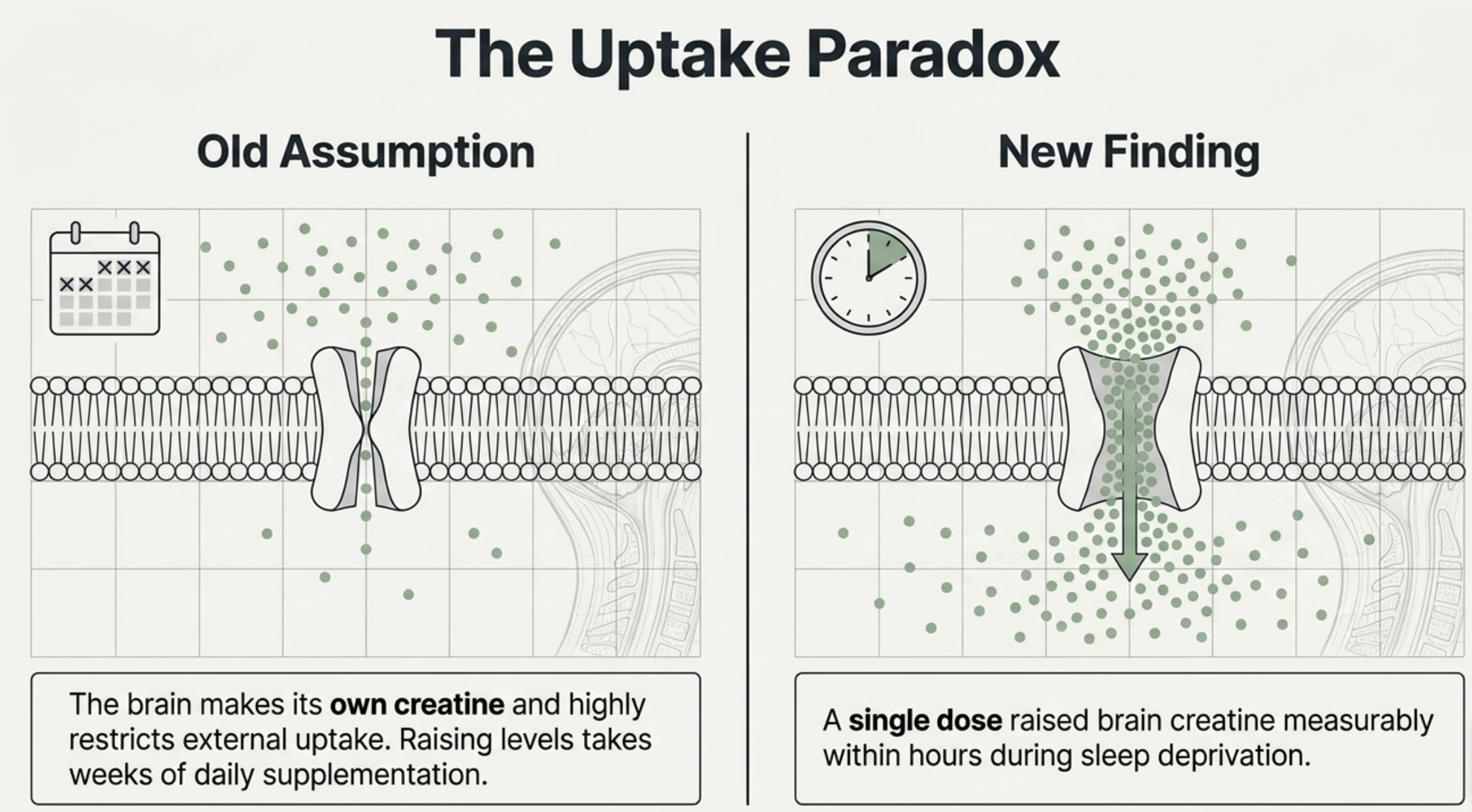
The consequence is that studies of oral creatine and the brain have generally required long timelines. Raising brain creatine levels measurably has typically taken weeks of daily supplementation, and shorter attempts often found little or no change. The working assumption in the field was clear: whatever creatine does for the brain, it does slowly, and a single dose could not meaningfully change brain creatine on the timescale of hours.
This is the assumption the study set out to test, and it chose an unusual condition in which to test it, not a rested brain, but a brain pushed into metabolic stress by a night without sleep.
The Study
The design was small but rigorous, built to catch changes in brain chemistry and cognition as they unfolded across a sleepless night.
Fifteen healthy young adults, average age around 23, each completed the study twice, in a double-blind, placebo-controlled crossover. This design is a particular strength: because every participant served as their own control, receiving creatine on one night and placebo on another in randomized order, the comparison is not between different people but within the same person, which removes much of the noise that individual differences introduce. Neither the participants nor the researchers administering the tests knew which substance was given on which night.
On each study night, participants stayed awake for roughly 21 hours of monitored sleep deprivation. At a set point in the evening, they received either a single dose of creatine or a matching placebo. The creatine dose was 0.35 grams per kilogram of body weight, which for a typical adult works out to somewhere around 25 grams, a very large single dose, on the order of five to ten times a standard daily serving. This is worth registering clearly now, because it is central to interpreting the study: this was not a normal supplemental dose, but a deliberately high one chosen to maximize the chance that creatine would reach the brain.
Throughout the night, at four time points, the researchers measured two things in parallel. The first was the brain's chemistry, captured with magnetic resonance spectroscopy, a form of MRI that reads out the concentrations of specific molecules in living brain tissue rather than producing an anatomical picture. This let them track the high-energy phosphate compounds at the heart of the creatine system, phosphocreatine, ATP, and inorganic phosphate, along with total creatine and the acidity of the brain tissue. The second was cognition, assessed with a battery of tasks measuring processing speed, memory, and vigilance.
The result was a time-resolved picture of both the brain's energy state and its cognitive performance across a night of sleep deprivation, measured once with a large dose of creatine on board and once without. That let the researchers ask two distinct questions: what does sleep deprivation do to the brain's energy economy, and what does a single large dose of creatine do to that trajectory?
What Sleep Deprivation Did to the Brain's Energy State
Before looking at what creatine did, it helps to see clearly what it was working against, because the placebo nights provided a clean picture of a brain being drained by sleep loss.
The subjective toll was steep. By the small hours of the morning, the participants' fatigue and sleepiness scores had risen to well over double their evening baseline, a more than 140% increase, the felt experience of a brain running out of resources.
Underneath that feeling was a measurable metabolic decline. The ratio of phosphocreatine to inorganic phosphate fell by around 5% in the brain regions measured. This ratio is a well-established readout of a cell's energy status: phosphocreatine is the charged reserve, and inorganic phosphate is what is left behind when high-energy phosphate bonds are spent. When the reserve falls and the spent byproduct rises, the ratio drops, and that drop is a direct sign that the tissue is consuming its energy buffer faster than it is replenishing it. The sleep-deprived brain was, in effect, running its battery down.
Alongside this, the acidity of the brain tissue rose, meaning the pH fell, a small but statistically significant drop that deepened as the night went on. This is a subtle but telling marker. When cells lean harder on certain energy-producing pathways under stress, they generate more acid as a byproduct, and the local pH drops. A falling pH is another fingerprint of metabolic strain, the chemical residue of a tissue working harder to meet its energy needs.
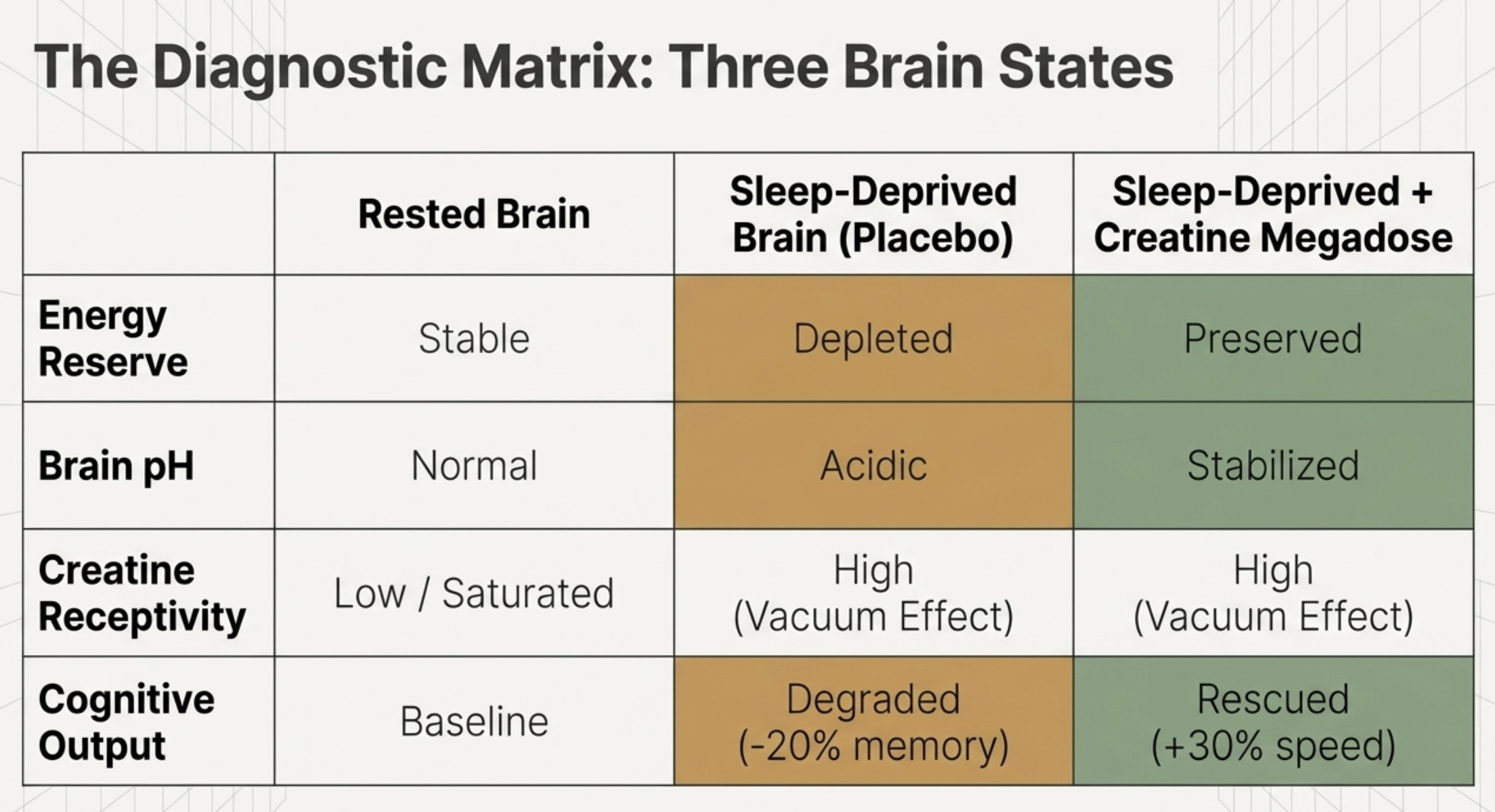
And the cognition tracked the chemistry. As the energy markers declined, the participants got measurably worse at the tasks sleep deprivation is known to degrade. Short-term memory fell sharply, with performance on a digit-span test dropping nearly 20%. Processing speed slowed, by around 17% on language tasks. Vigilance and reaction times deteriorated. The decline was not vague or purely felt; it showed up as concrete decrements on standardized tests, in lockstep with the metabolic changes in the brain.
This is the important setup for the rest of the study. Sleep deprivation was not just making people feel tired. It was producing a specific, measurable deterioration in the brain's energy economy, a falling energy reserve, a rising acidity, and a parallel erosion of cognitive performance. That is the trajectory a single dose of creatine was being asked to interrupt.
What a Single Dose of Creatine Did
Against that backdrop of decline, the creatine nights looked different, and the differences showed up in both the brain's chemistry and the participants' cognition.
The first and most fundamental result was that the creatine reached the brain. Total brain creatine, measured directly by spectroscopy, rose by roughly 5% after the single dose, becoming detectable within a few hours. This is the finding that was not supposed to happen on this timescale, and its significance is large enough that it gets its own discussion below. But everything else in the study rests on it: the creatine was not merely sitting in the bloodstream, it was getting into brain tissue.
With more creatine in the brain, the energy markers shifted in the direction consistent with a replenished buffer. The decline in the phosphocreatine-to-phosphate ratio that marked the placebo nights was prevented or blunted, meaning the brain's charged energy reserve held up better than it did without creatine. ATP levels declined, by around 8.5% versus placebo, which sounds counterintuitive but fits the mechanism precisely: when the phosphocreatine buffer is well stocked, it hands its phosphate to ADP to regenerate ATP so efficiently that the system can meet demand while drawing down other parts of the phosphate pool. The pattern the researchers saw, a preserved phosphocreatine reserve alongside shifts in ATP and phosphate, is the signature of a well-supplied creatine buffer doing its job.
One of the more striking metabolic findings concerned the brain's acidity. Recall that sleep deprivation caused the brain's pH to fall, a marker of metabolic strain. Creatine prevented that drop. The pH held closer to its rested baseline through the night. This matters because it suggests creatine was not just adding to the energy reserve but easing the metabolic stress itself, keeping the brain's chemistry closer to its normal, unstressed state.
And the cognition followed. On the creatine nights, participants performed better than on placebo across several measures. Processing speed improved most clearly: on language tasks, it was faster by nearly 30% relative to placebo, with smaller but significant gains on logic and numeric tasks. Word memory improved by around 10%, reaction speed improved, and subjective fatigue was reduced. The effects were not uniform across every single test, as one would expect in a study this size, but the overall pattern was consistent: the cognitive deterioration that sleep deprivation produced was substantially offset by the single dose of creatine.
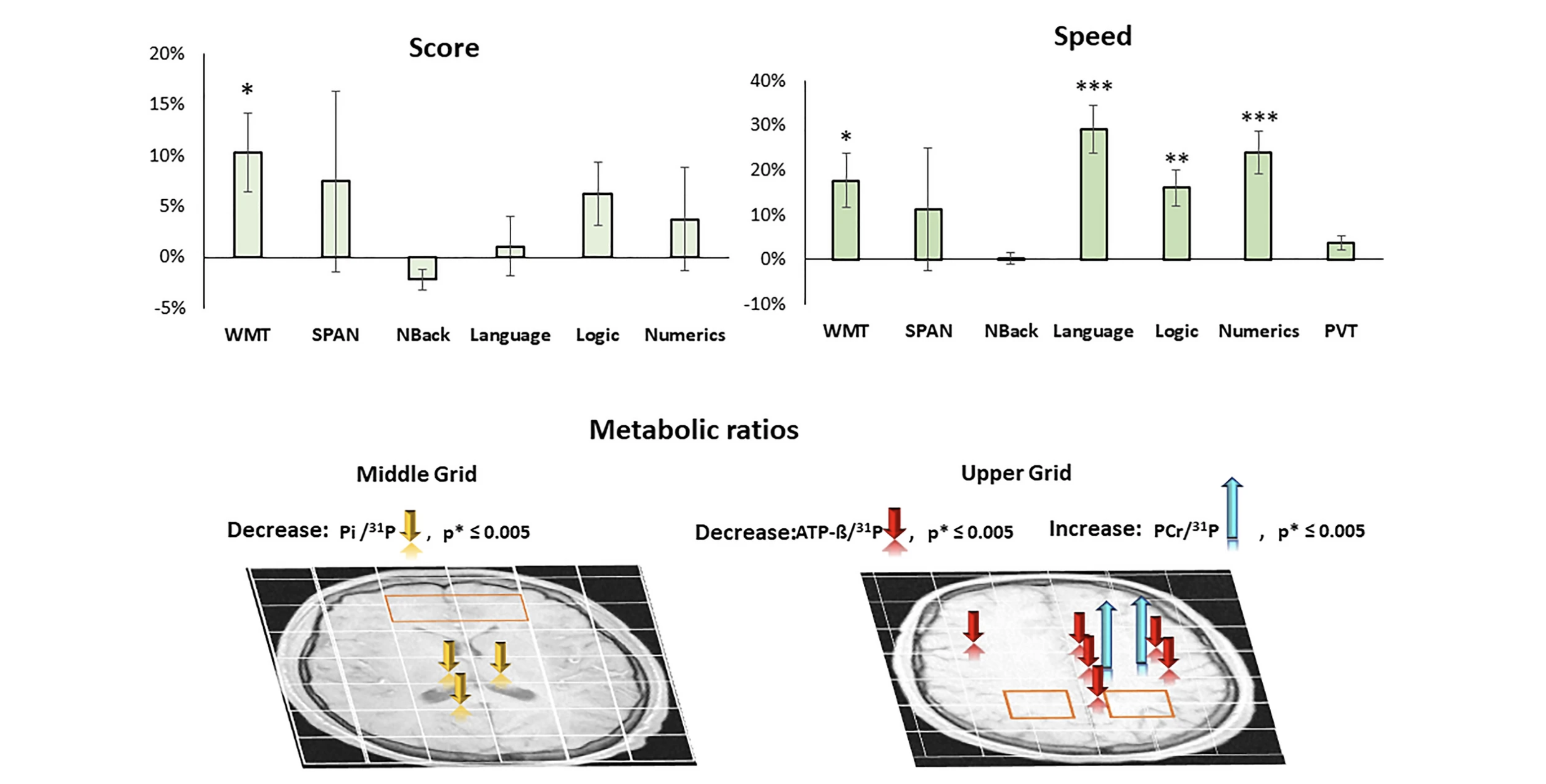
Figure 1: The effect of a single dose of creatine during sleep deprivation. Compared with placebo, creatine improved word memory and sped up processing time on language, logic, and numeric tasks, while shifting the brain's high-energy phosphates, lowering ATP and preserving the phosphocreatine reserve. Colored arrows on the brain slices mark where each significant change was localized.
The timing is worth noting. The cognitive and metabolic effects were detectable starting around 3 to 4 hours after the dose, reached their peak around 4 hours, and persisted until the final measurements about 9 hours after administration. This is a rapid onset for a brain effect from oral creatine, and it is the temporal fingerprint of the central surprise of the study, which is worth examining on its own.
The Real Surprise: Why a Stressed Brain May Be a Receptive One
The cognitive improvements are the headline most people take from this study, but the deeper and more original finding is the one hiding in the timing. A single oral dose of creatine raised brain creatine within hours. According to everything the field believed about how creatine reaches the brain, that should not have been possible.
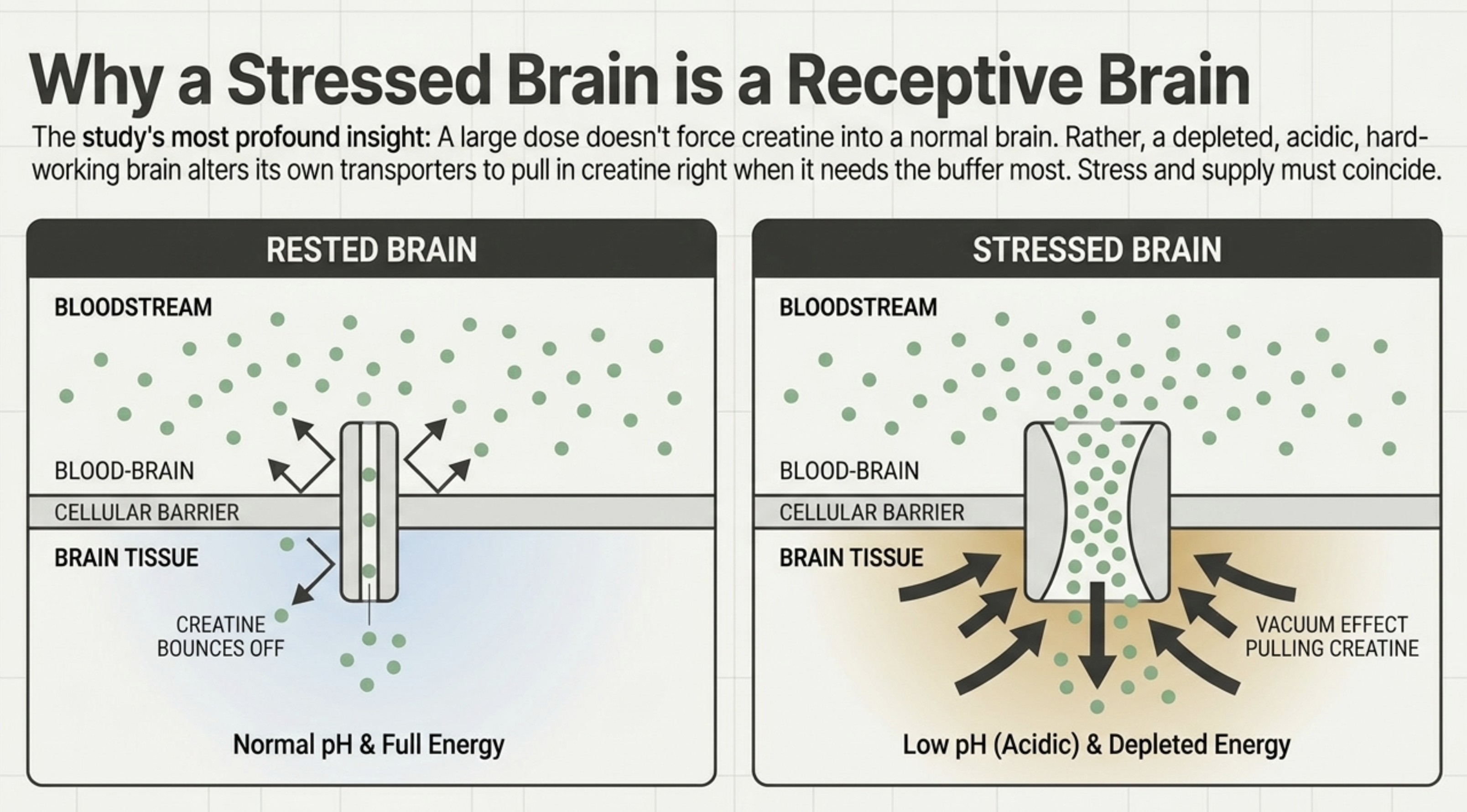
Recall the obstacle. The blood-brain barrier admits creatine through a transporter that is limited in quantity and appears to run near saturation, and the brain makes much of its own creatine rather than importing it. These are the reasons raising brain creatine was thought to require weeks of daily supplementation. A single dose, however large, was not expected to move the needle on the timescale of one night. Yet it did. So the question the researchers had to confront was not just what creatine did, but why it was able to get in at all, so quickly, when the established understanding said it could not.
Their proposed answer is the most interesting idea in the paper, and it reframes the entire result. The reason the creatine got in, they suggest, may be precisely that the brain was under stress. The very conditions of the experiment, sleep deprivation combined with demanding cognitive tasks, may have changed the brain in ways that temporarily opened the door to creatine uptake.
The reasoning runs through the metabolic stress itself. A depleted, hard-working brain is more acidic and more energy-hungry, and both of those conditions can alter the activity of transporters at the blood-brain barrier. The researchers point specifically to the acidification: the falling pH of the stressed brain may trigger cellular machinery that, in turn, increases the driving force for creatine transport across the barrier. In this account, the creatine transporter is not a fixed, immovable bottleneck. It is responsive to the state of the tissue, and a brain in metabolic distress may upregulate its capacity to pull creatine in, precisely when it most needs the energy buffer that creatine provides.
There is a second strand to the explanation, and it concerns demand. When a cell is rapidly consuming its energy reserves, it is also rapidly consuming creatine and phosphocreatine, which lowers the internal creatine concentration and increases the gradient favoring uptake from outside. A brain burning through its buffer creates, in effect, a vacuum that pulls creatine inward, but only if there is enough creatine available in the blood to be pulled. That is what the large single dose provided: an unusually high extracellular availability of creatine, arriving at exactly the moment the stressed brain was primed to absorb it.
Put those together and the finding transforms. It is not simply that a big enough dose can force creatine into the brain. It is that a stressed, depleted, hard-working brain becomes receptive to creatine in a way a rested brain is not, and supplying abundant creatine at that moment allows rapid uptake that would not occur under ordinary conditions. The stress and the supply had to coincide. This is why the same dose given to a well-rested person might do far less: without the metabolic demand opening the door, the creatine has no special reason to rush in.
Reading This Correctly
This is a carefully conducted study, but it is a small one testing an extreme condition, and several limitations bound what can be drawn from it.
The dose is the first and most important. Participants received 0.35 grams per kilogram of body weight in a single sitting, roughly 25 grams for a typical adult, which is far above a normal creatine serving and many times the 3 to 5 grams used for everyday supplementation. This dose was chosen deliberately to maximize the chance of creatine reaching the brain, and it is not a template for routine use. Very large single doses of creatine can cause gastrointestinal distress in many people, though this study reported good tolerance in its participants. Nothing here should be read as a recommendation to take a megadose of creatine.
The sample was small and narrow. Fifteen healthy young adults, average age around 23, is enough for a tightly controlled crossover study to detect within-person effects, but it is a limited and homogeneous group. The findings cannot be assumed to generalize to older adults, to people with different baseline creatine levels, or to clinical populations without further study. Small studies are also more vulnerable to statistical noise, and while the researchers applied appropriate corrections, some of the individual effects were modest and would benefit from replication in larger samples.
The condition was specific and extreme. This was a single night of roughly 21 hours of acute sleep deprivation, a particular kind of metabolic stress. It says little directly about creatine's effects on cognition in rested people going about ordinary life, or about chronic sleep restriction, which is far more common than a single all-nighter. The study is a clean probe of a stressed brain, not a statement about everyday cognitive enhancement.
The uptake finding, striking as it is, is also condition-dependent by the authors' own interpretation. If the rapid brain uptake happened because the stressed brain became receptive, then it is not evidence that a single dose reliably raises brain creatine under normal conditions. The mechanism that makes the finding interesting also limits how far it can be extrapolated.
Finally, this study was not about aging. Its participants were young, and its condition was sleep loss, not the slow energetic decline of an aging brain. The connections to aging and long-term brain health, discussed next, are extensions of the broader creatine literature and of the general principle the study illustrates, not findings of the study itself.
What This Means, Including for the Aging Brain
Strip away the extreme conditions, and this study leaves behind a durable and useful idea: the brain runs on a buffered energy system, that buffer can be depleted by stress, and creatine is the raw material that stocks it. That principle is what makes the finding worth sitting with, and it reaches in two directions.
The first is practical, and appropriately bounded. For the specific situation the study modeled, a brain pushed into an acute energy crisis by sleep loss, a well-supplied creatine buffer helped hold cognition and brain chemistry closer to their rested state. This is genuinely interesting for anyone facing acute cognitive demand under sleep deprivation, though with two honest qualifications: the study used a megadose that is not a template for routine use, and the effect was specific to a stressed brain, not a general cognitive enhancer for the well-rested. What it does not support is the idea that a single large scoop reliably sharpens an ordinary day.
The second direction is where this connects to longevity, and it has to be drawn carefully, because this study did not examine aging at all. The bridge is conceptual. The aging brain is, in part, an energetically compromised brain. Brain energy metabolism tends to decline with age, mitochondrial function wanes, and the efficiency of the systems that keep neurons supplied with ATP diminishes. In broad terms, the aging brain shares something with the sleep-deprived one: both are operating with a reduced energy margin. This is precisely why creatine, a buffer against energy shortfalls, has become an active area of investigation for cognitive aging and brain health, quite apart from any single sleep study.
That broader literature is where the practical longevity signal actually lives, and it points somewhere specific. The people most likely to benefit from creatine's cognitive effects appear to be those who start with lower brain creatine stores, and several groups tend to fall into that category: older adults, whose synthesis and stores decline with age, and vegetarians and vegans, who take in little dietary creatine because it comes mainly from meat. In these lower-baseline groups, supplementation has more room to raise creatine levels, and the cognitive research has tended to find its clearer signals there. Importantly, the doses studied for cognition in these populations are daily doses in the range of several grams to around ten, taken consistently, not the acute megadose used in the sleep-deprivation study.
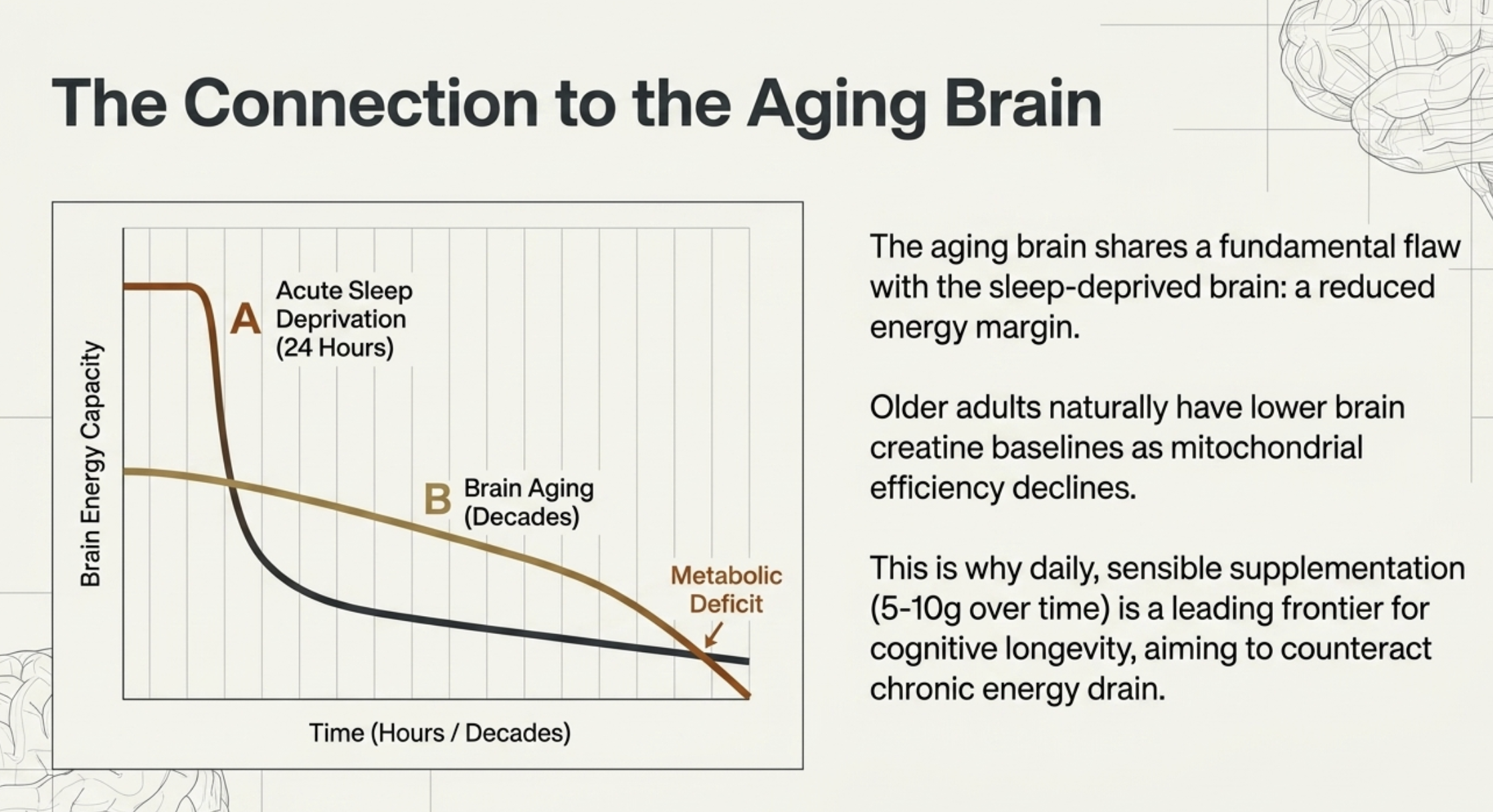
So the honest synthesis is this. The sleep-deprivation study is not evidence that creatine slows brain aging. It is a vivid, mechanistically detailed demonstration of a principle, that brain creatine buffers cognition against energetic stress, that makes the ongoing investigation of creatine for the aging brain more compelling. The aging brain faces a chronic, slow version of the energy challenge that sleep deprivation imposes acutely, and creatine is one of the few well-tolerated, well-studied compounds that speaks directly to that challenge. Whether it meaningfully protects cognition over the long arc of aging is a question the current research is actively working to answer, and it is a reasonable one to be optimistic about while the evidence matures.
Conclusion: The Brain's Battery, and How to Keep It Charged
The most useful way to think about this study is to return to the image at its center: the brain as a device running on a rechargeable buffer, and creatine as the material that keeps that buffer stocked. Sleep deprivation drains it. A single large dose of creatine, in this study, helped refill it, faster than the field believed possible, and the likely reason is one of the more elegant findings in recent cognitive science, that a depleted, hard-working brain becomes receptive to creatine in a way a rested one is not. The stress opened the door, and the creatine walked through it.
That result is worth holding at the right altitude. It is not a license to take megadoses, and it is not proof that creatine sharpens an ordinary, well-rested mind. The dose was extreme, the sample was small, and the condition was a single sleepless night in young adults. What the study demonstrates cleanly is a principle rather than a prescription: brain cognition rests on a buffered energy economy, that economy falters under stress, and the size of the creatine buffer matters to how well the brain holds up when its energy runs short.
That principle is why creatine has quietly become one of the more interesting compounds in the longevity conversation, well beyond its origins in the weight room. The aging brain faces its own version of an energy shortfall, chronic and slow rather than acute, but rooted in the same underlying problem of a metabolism that no longer keeps pace with demand. The people who tend to start with the least brain creatine, older adults among them, are also the ones in whom supplementation has shown the most cognitive promise. This study did not test any of that. But by making visible, in a single dramatic night, exactly how brain creatine buffers cognition against metabolic stress, it strengthens the case for taking seriously a simple question: whether keeping that buffer well stocked, at sensible daily doses over the long run, is one of the more accessible things a person can do for the aging brain.
The brain runs on a battery. This study is a clear look at what happens when it drains, and at how readily, under the right conditions, it can be recharged.
Related studies