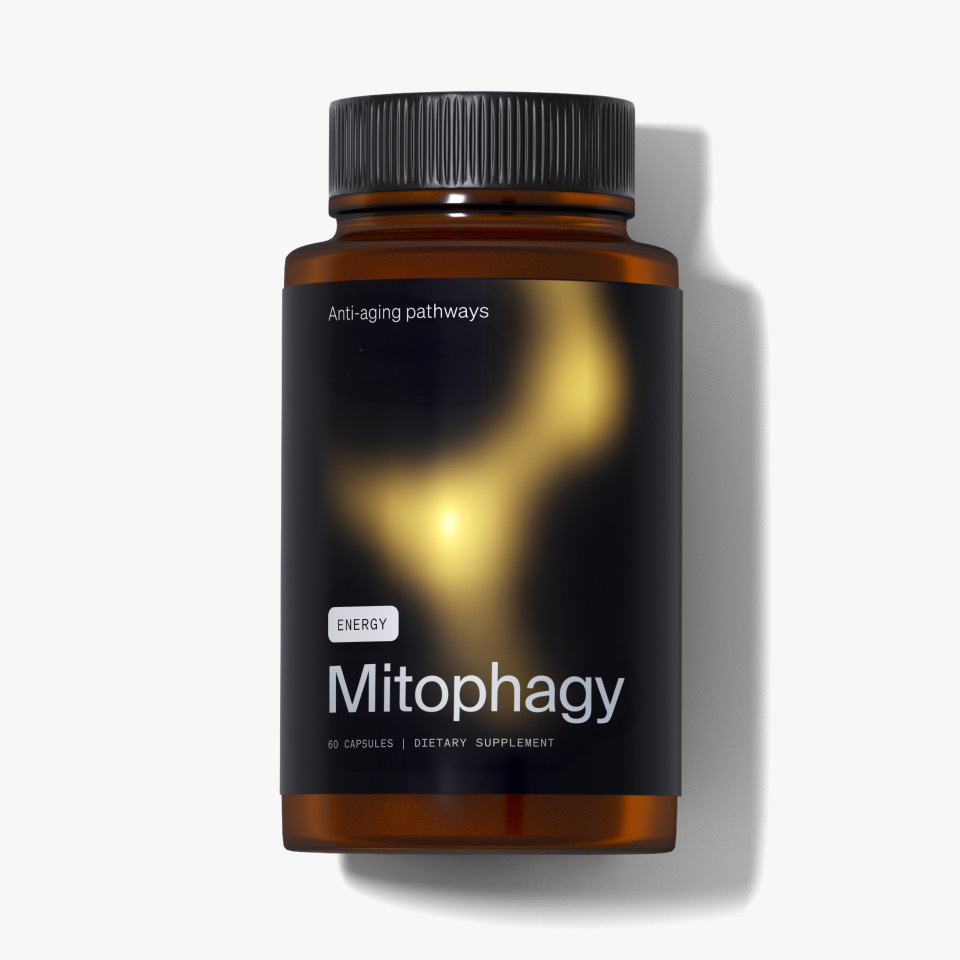
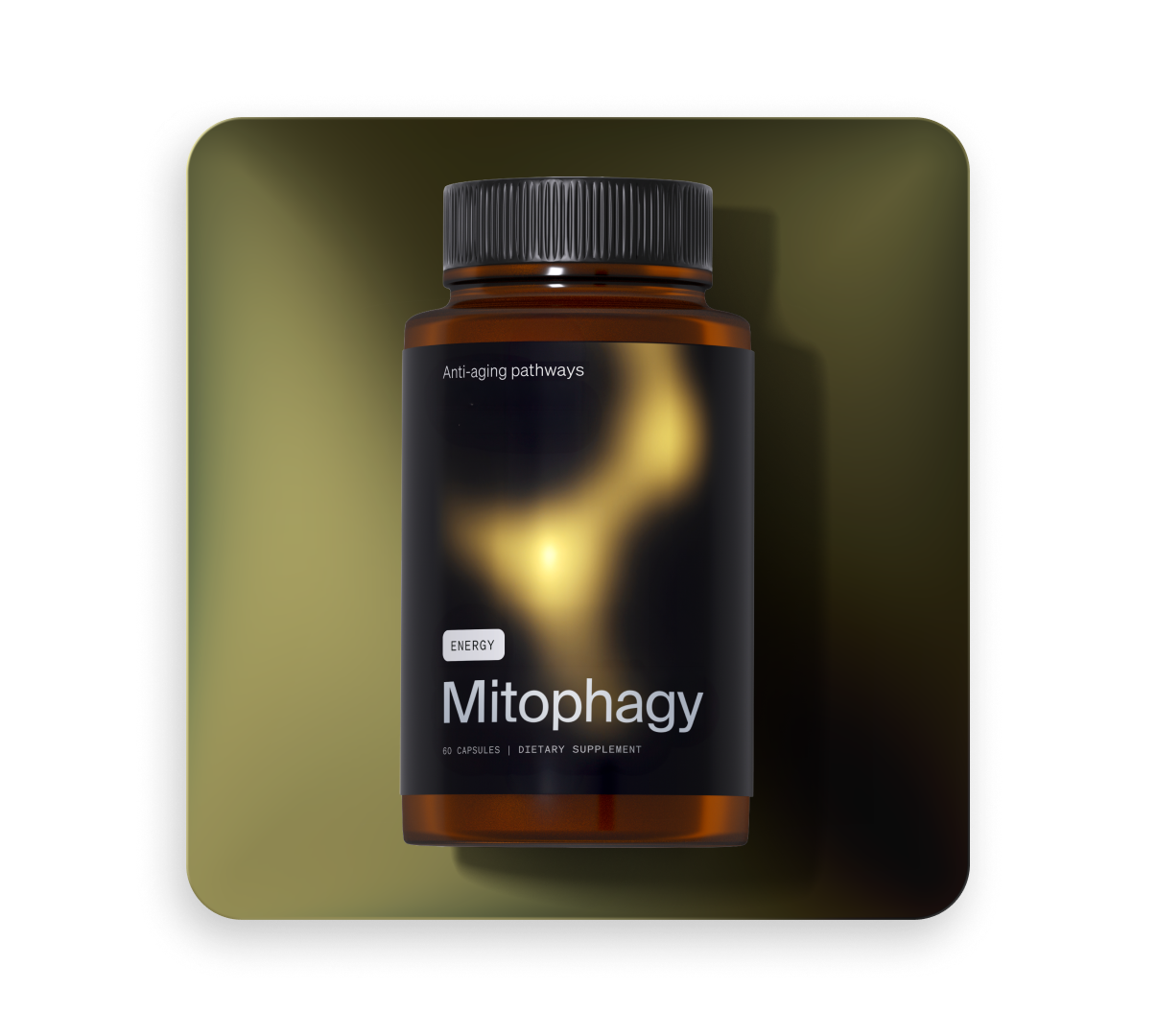
Mitophagy Formula
A unique longevity blend designed to activate mitophagy, clears damaged mitochondria, and reduces oxidative stress for cellular energy and healthy aging.
Removes dysfunctional mitochondria so cells can renew their energy systems.
Healthy mitochondria help power neurons and support cognitive resilience.
Improved mitochondrial efficiency helps muscles generate energy more effectively during activity.


FUNCTIONAL BENEFITS
Stay sharp as you age
EGCG crosses the blood-brain barrier, supporting brain cell health
Supports amyloid-clearance pathways and neuronal resilience
Activates mitophagy, renewing mitochondria to maintain brain cell energy
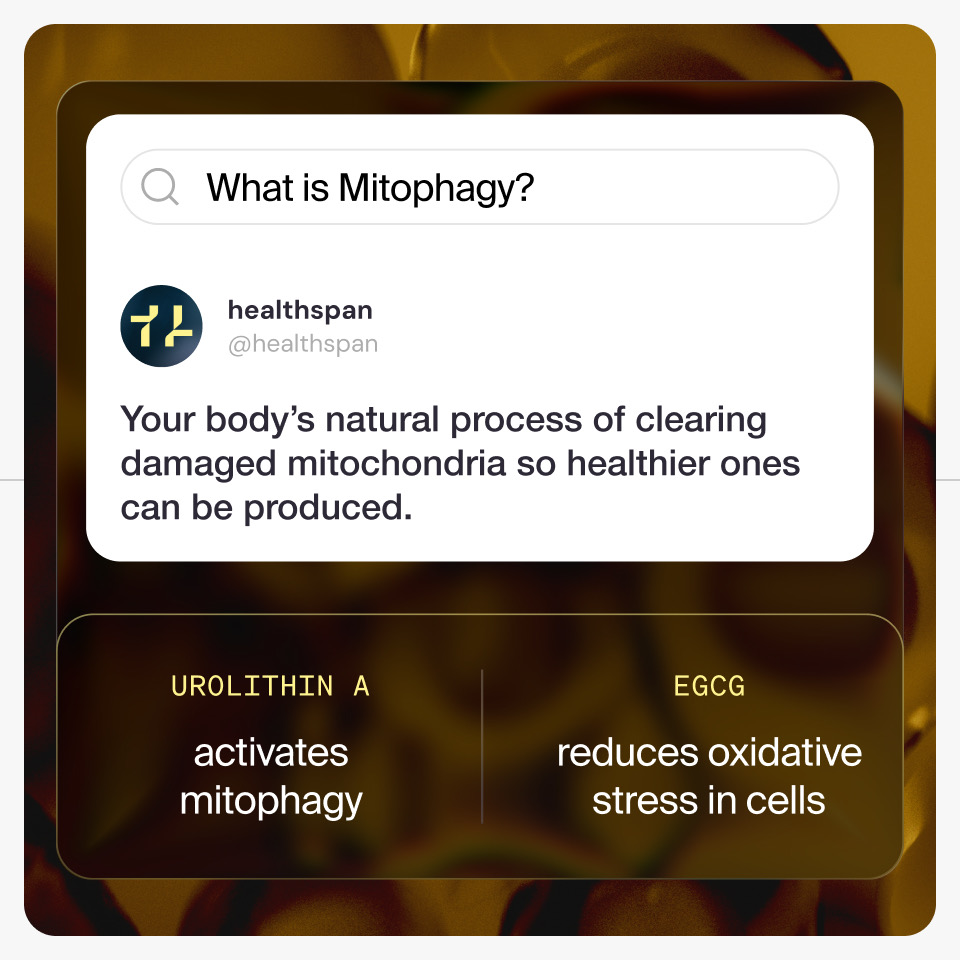
What is Mitophagy?
Cells continuously monitor mitochondria and identify those that are no longer functioning properly.
Through mitophagy, cells break down damaged mitochondria before they accumulate and disrupt cellular energy production.
The cell repurposes useful components from degraded mitochondria to support cellular repair and renewal.
New mitochondria are generated through mitochondrial biogenesis, restoring efficient energy production.
CELLULAR PATHWAYS
Activating Mitophagy

Mitophagy Activation
Urolithin A supports mitophagy, your body’s way of removing old, dysfunctional mitochondria—helping cells run more efficiently.

Activates AMPK Pathways
By activating AMPK, Urolithin A helps your body burn fat, manage blood sugar, and produce clean cellular energy.

Modulates mTOR for Renewal
Urolithin A gently slows mTOR activity—encouraging cellular renewal and better stress recovery.

Reduce Chronic Inflammation
Gut-driven SCFAs suppress systemic inflammation, supporting cardiovascular, cognitive, and metabolic resilience.

Mimic Caloric Restriction without Fasting
By reducing carbohydrate availability, Acarbose acts as a calorie restriction mimetic—impacting IGF-1, insulin signaling, and mitochondrial health.
Mitophagy Activation
Urolithin A supports mitophagy, your body’s way of removing old, dysfunctional mitochondria—helping cells run more efficiently.
Activates AMPK Pathways
By activating AMPK, Urolithin A helps your body burn fat, manage blood sugar, and produce clean cellular energy.
Modulates mTOR for Renewal
Urolithin A gently slows mTOR activity—encouraging cellular renewal and better stress recovery.
Reduce Chronic Inflammation
Gut-driven SCFAs suppress systemic inflammation, supporting cardiovascular, cognitive, and metabolic resilience.
Mimic Caloric Restriction without Fasting
By reducing carbohydrate availability, Acarbose acts as a calorie restriction mimetic—impacting IGF-1, insulin signaling, and mitochondrial health.
Mitophagy Activation
Urolithin A supports mitophagy, your body’s way of removing old, dysfunctional mitochondria—helping cells run more efficiently.
Activates AMPK Pathways
By activating AMPK, Urolithin A helps your body burn fat, manage blood sugar, and produce clean cellular energy.
Modulates mTOR for Renewal
Urolithin A gently slows mTOR activity—encouraging cellular renewal and better stress recovery.
Reduce Chronic Inflammation
Gut-driven SCFAs suppress systemic inflammation, supporting cardiovascular, cognitive, and metabolic resilience.
Mimic Caloric Restriction without Fasting
By reducing carbohydrate availability, Acarbose acts as a calorie restriction mimetic—impacting IGF-1, insulin signaling, and mitochondrial health.
Mitophagy Activation
Urolithin A supports mitophagy, your body’s way of removing old, dysfunctional mitochondria—helping cells run more efficiently.
Activates AMPK Pathways
By activating AMPK, Urolithin A helps your body burn fat, manage blood sugar, and produce clean cellular energy.
Modulates mTOR for Renewal
Urolithin A gently slows mTOR activity—encouraging cellular renewal and better stress recovery.
Reduce Chronic Inflammation
Gut-driven SCFAs suppress systemic inflammation, supporting cardiovascular, cognitive, and metabolic resilience.
Mimic Caloric Restriction without Fasting
By reducing carbohydrate availability, Acarbose acts as a calorie restriction mimetic—impacting IGF-1, insulin signaling, and mitochondrial health.
PRECLINICAL EVIDENCE
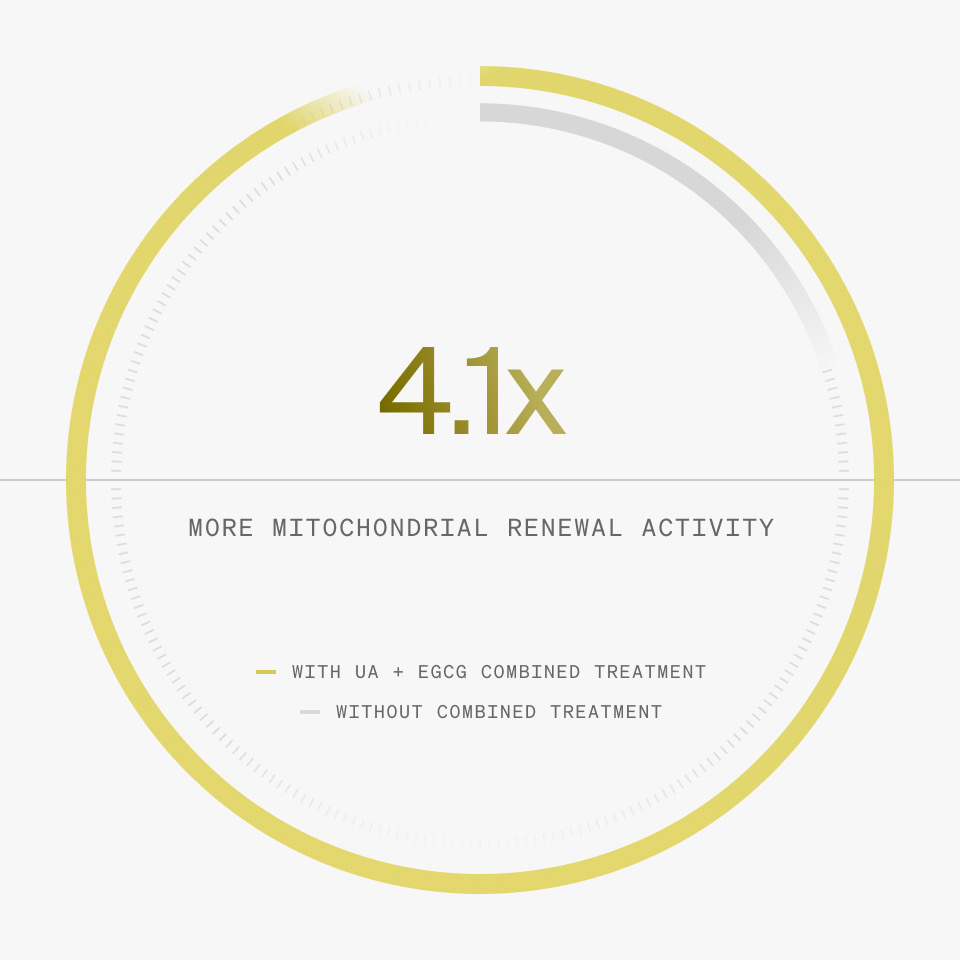
Enhanced Mitochondrial Renewal
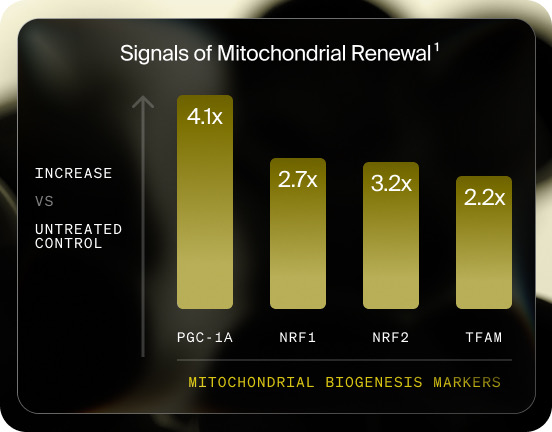
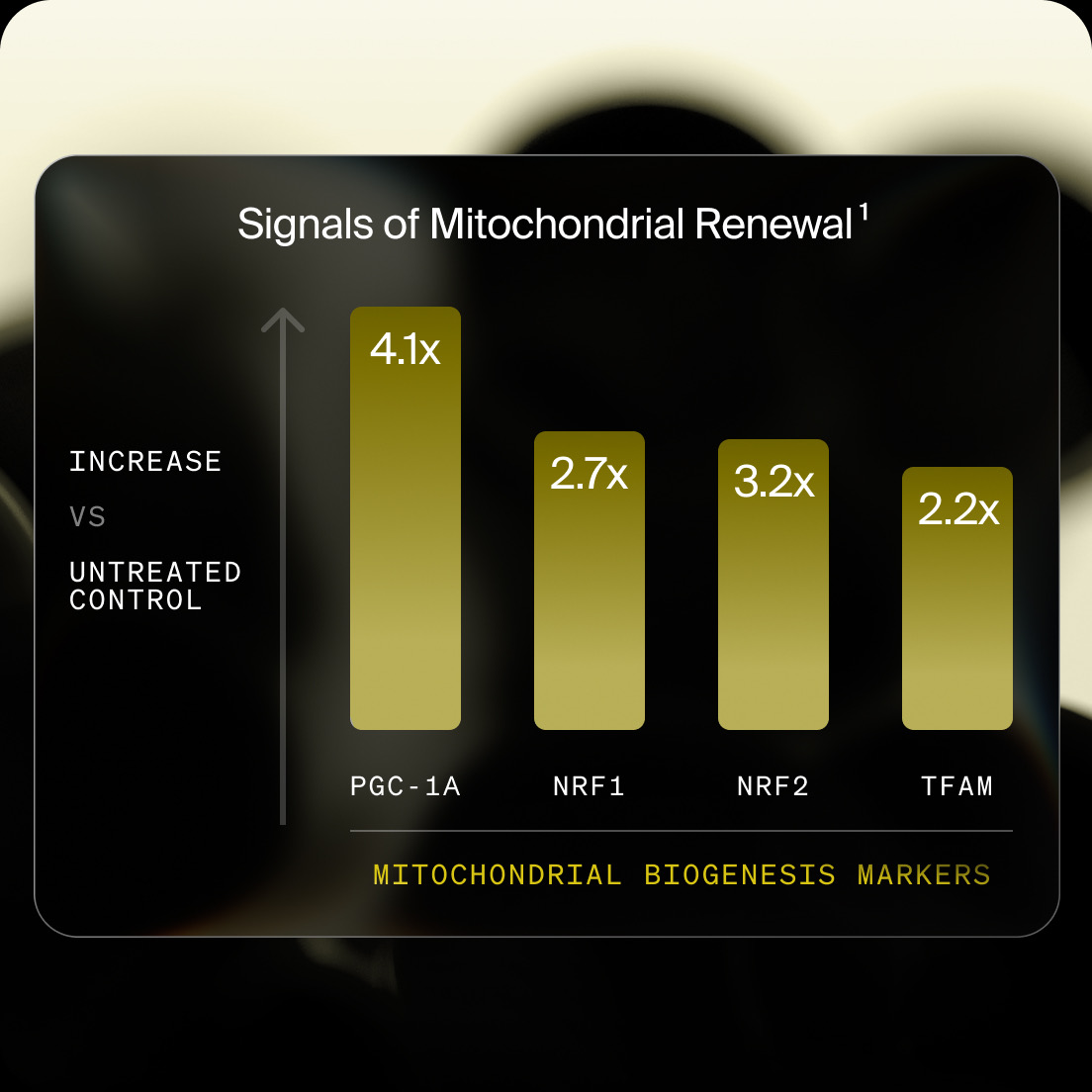
1 Data derived from a preclinical study evaluating mitochondrial biogenesis gene expression following combined Urolithin A and EGCG treatment in an Alzheimer’s disease mouse model (hAbKI mice).
Hear from our patients
Reviews
400 reviews
OUR TREATMENTS
Frequently asked questions
Mitophagy is the cellular process that removes damaged mitochondria so healthier ones can take their place. Mitochondria are responsible for producing energy inside cells, but they become less efficient as they age. When damaged mitochondria accumulate, they can produce excess oxidative stress and disrupt cellular signaling. Supporting mitophagy helps maintain mitochondrial quality control, allowing cells to remove dysfunctional mitochondria and rebuild a healthier energy system over time. Because mitochondria power nearly every tissue in the body—including muscles, brain cells, and immune cells—mitophagy has become an important focus in longevity research.
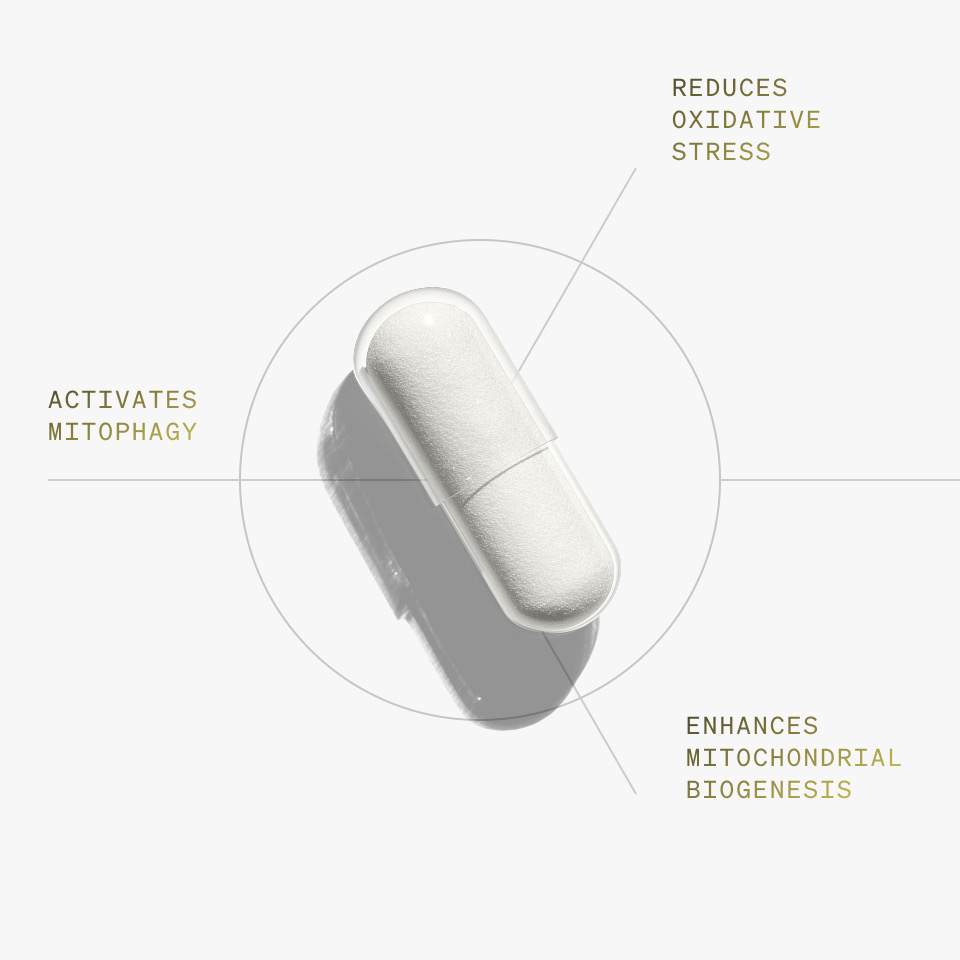
The Mitophagy protocol is designed around two complementary mechanisms that support mitochondrial quality control: 1) Removal of damaged mitochondria through activation of mitophagy 2) Support for mitochondrial rebuilding and protection by reducing oxidative stress and supporting cellular signaling pathways involved in mitochondrial biogenesis. By addressing both sides of mitochondrial health—removal and rebuilding—the formulation supports a more resilient cellular energy system.
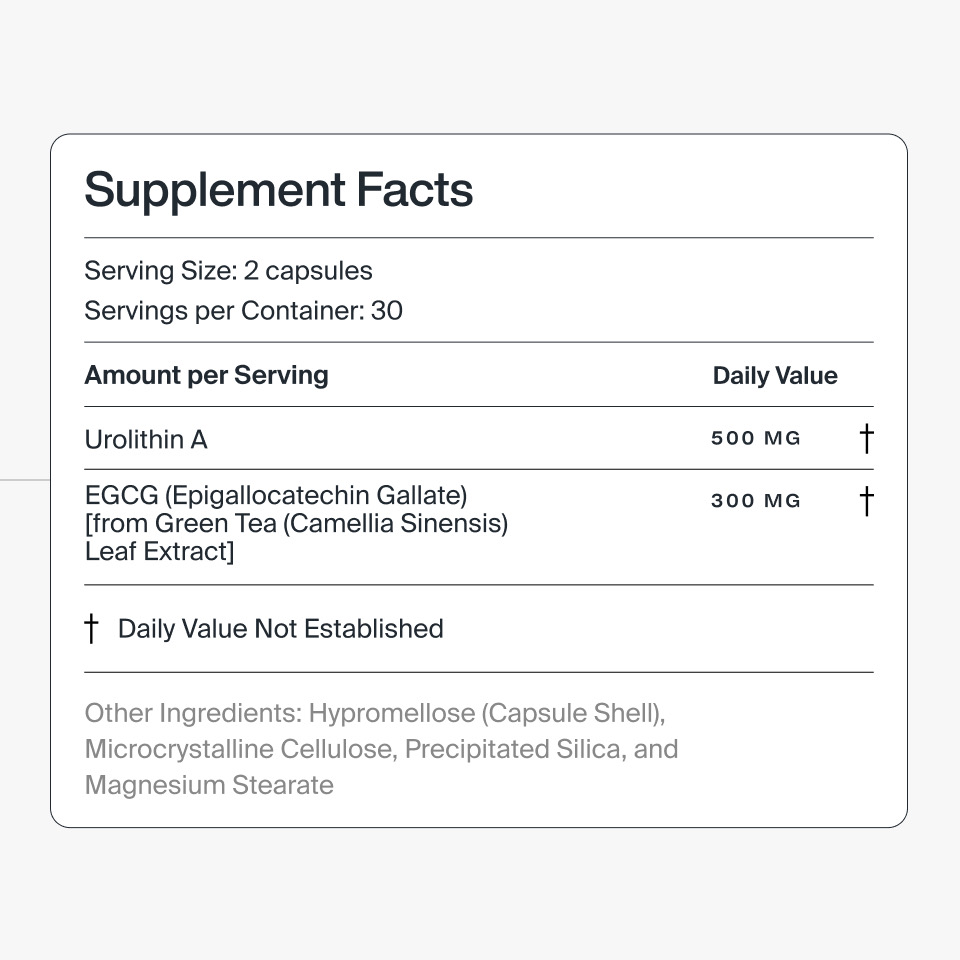
The Mitophagy protocol combines two well-studied compounds that work through complementary mechanisms: 1) Urolithin A (500 mg) – supports activation of mitophagy, helping cells remove dysfunctional mitochondria. 2) EGCG (300 mg) – a polyphenol from green tea that helps reduce oxidative stress and supports signaling pathways involved in mitochondrial biogenesis. Together these ingredients support mitochondrial renewal and help maintain a healthier mitochondrial network.
EGCG (epigallocatechin gallate) is the primary catechin found in green tea and has been widely studied for its effects on oxidative stress and cellular signaling. Research suggests EGCG can: reduce oxidative stress that damages mitochondria; support pathways involved in mitochondrial biogenesis (the creation of new mitochondria); help maintain a healthier cellular environment for mitochondrial renewal By combining mitophagy activation with mitochondrial protection, the protocol supports a more complete approach to mitochondrial health.
Mitochondrial renewal is a gradual biological process. While individual responses vary, many people begin noticing improvements in energy, endurance, or mental clarity within 4–8 weeks of consistent use. Research studying mitochondrial biomarkers typically measures changes over 8–16 weeks, reflecting the time required for cells to remove damaged mitochondria and rebuild healthier ones.
Start with 1 capsule daily for the first week, then increase to the full serving of 2 capsules per day (500 mg Urolithin A + 300 mg EGCG). Take with food and use consistently, as mitochondrial renewal occurs gradually over time.
Mitophagy is the cellular process that removes damaged mitochondria so healthier ones can take their place. Mitochondria are responsible for producing energy inside cells, but they become less efficient as they age. When damaged mitochondria accumulate, they can produce excess oxidative stress and disrupt cellular signaling. Supporting mitophagy helps maintain mitochondrial quality control, allowing cells to remove dysfunctional mitochondria and rebuild a healthier energy system over time. Because mitochondria power nearly every tissue in the body—including muscles, brain cells, and immune cells—mitophagy has become an important focus in longevity research.
The Mitophagy protocol is designed around two complementary mechanisms that support mitochondrial quality control: 1) Removal of damaged mitochondria through activation of mitophagy 2) Support for mitochondrial rebuilding and protection by reducing oxidative stress and supporting cellular signaling pathways involved in mitochondrial biogenesis. By addressing both sides of mitochondrial health—removal and rebuilding—the formulation supports a more resilient cellular energy system.
The Mitophagy protocol combines two well-studied compounds that work through complementary mechanisms: 1) Urolithin A (500 mg) – supports activation of mitophagy, helping cells remove dysfunctional mitochondria. 2) EGCG (300 mg) – a polyphenol from green tea that helps reduce oxidative stress and supports signaling pathways involved in mitochondrial biogenesis. Together these ingredients support mitochondrial renewal and help maintain a healthier mitochondrial network.
EGCG (epigallocatechin gallate) is the primary catechin found in green tea and has been widely studied for its effects on oxidative stress and cellular signaling. Research suggests EGCG can: reduce oxidative stress that damages mitochondria; support pathways involved in mitochondrial biogenesis (the creation of new mitochondria); help maintain a healthier cellular environment for mitochondrial renewal By combining mitophagy activation with mitochondrial protection, the protocol supports a more complete approach to mitochondrial health.
Mitochondrial renewal is a gradual biological process. While individual responses vary, many people begin noticing improvements in energy, endurance, or mental clarity within 4–8 weeks of consistent use. Research studying mitochondrial biomarkers typically measures changes over 8–16 weeks, reflecting the time required for cells to remove damaged mitochondria and rebuild healthier ones.
Start with 1 capsule daily for the first week, then increase to the full serving of 2 capsules per day (500 mg Urolithin A + 300 mg EGCG). Take with food and use consistently, as mitochondrial renewal occurs gradually over time.