Doctors Keep Telling Women Over 40 Their Exhaustion Is "Just Aging." A Growing Number Are Finding Out It Was Low Testosterone, and No One Ever Tested It.
Advertorial · Hormone Rankings
The midlife conversation
✓ Medically Reviewed by Jenna Polk DCN, MS, CNS, LDN
There is a particular kind of frustration that comes with being able to manage your life while feeling increasingly disconnected from it.
You still answer the messages. Make the appointments. Remember what everyone needs. From the outside, very little appears to have changed.
But you notice.
The evening arrives and you have nothing left for yourself. A weekend together sounds lovely until it is actually time to go. Affection is still there, but the anticipation you once felt has become something you remember more easily than you experience.
You can explain away one difficult week. Even one difficult month.
What becomes harder to explain is the growing distance between the way you are living and the way you want to feel.
And when you finally work up the nerve to bring it up, a quick conversation about stress or age may leave you with more questions than answers.
What if the next appointment could be more useful?
What if you could talk openly about desire, ask about hormones—including testosterone—and understand whether there is a treatment worth considering for your situation?
That is the starting point of this article. And it is why Healthspan’s testosterone cream offering for women deserves a closer look.
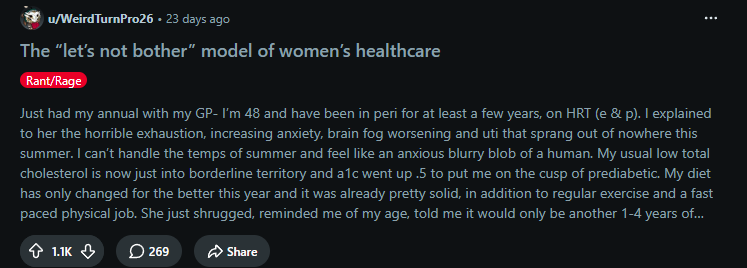
The Part Of Midlife That Can Be Hardest To Say Out Loud
It can be easier to tell someone you are sleeping badly than to tell them you no longer feel much interest in sex.
Easier to joke about another birthday than to explain that something important feels different.
Perhaps you love your partner and enjoy being close. Perhaps the relationship is good. Perhaps nothing dramatic happened at all. Yet the interest that once seemed effortless now feels distant.
And you miss it.
Not because anyone else has decided how often you should want sex. Not because there is a standard you need to meet. Because this change matters to you.
You should be able to say that without apologizing.
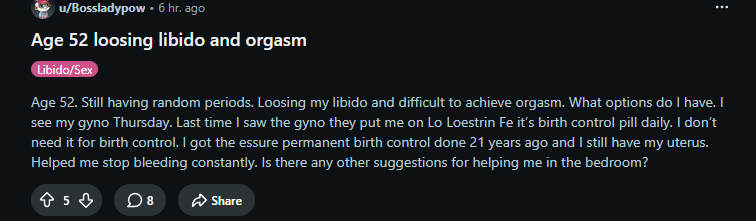
The Menopause Society describes sexual health in midlife as a combination of physical, emotional, and relationship factors. Hormones can be part of the picture, alongside sleep, medications, discomfort, stress, and other influences. That is a reason to look carefully, rather than assume there is only one explanation. Source: The Menopause Society
You do not need to arrive at an appointment knowing which factor applies. You need an opportunity to explain what has changed—and a clinician willing to investigate with you.
Kimberly Wanted Relief. And Someone In Her Corner.
Healthspan patient Kimberly shares her experience with hot flashes, night sweats, and the support she received along the way. In the video below, she talks about the place coaching had in her care.
This is her story in her own words.
 Watch Kimberly’s story
Her experience with hormone care and coaching. Individual results vary.
Her experience is with Healthspan’s broader women’s hormone-care program, not evidence of what testosterone alone will do. But the need at the center of it is familiar: understanding what is happening and having someone help you work through it.
You can begin with questions. You do not have to arrive with the answer.
Testosterone Belongs In A Conversation About Women’s Health
For many people, the word brings to mind men’s clinics, weight rooms, and advertisements aimed at husbands.
That association can make the first question feel awkward: why would a woman ask about testosterone?
Because women produce it too. Testosterone is part of female physiology, and concentrations can decline during the reproductive years. Its relevance does not disappear because the advertising around it has usually targeted men. Source: Global Consensus Position Statement
Knowing that does not mean every woman needs more of it. It means the question itself is worth treating seriously.
You should not have to choose between dismissing testosterone outright and believing every dramatic claim you encounter online.
There is room for an informed conversation in the middle: what has been studied, which women may benefit, what treatment involves, and what remains uncertain.
For someone who has spent months wondering why intimacy feels different, that conversation can be valuable before a prescription ever enters the picture.
Here Is Where The Evidence Is Strongest
The clearest evidence supports testosterone for postmenopausal women with hypoactive sexual desire disorder, or HSDD: low desire associated with personal distress, assessed in the context of other possible causes.
In that population, treatment can improve sexual desire and aspects of sexual function. Evidence does not establish testosterone as a general treatment for fatigue, brain fog, weight loss, or osteoporosis. Those concerns deserve evaluation in their own right. Source: Global Consensus Position Statement
That distinction matters because the internet tends to put every midlife frustration into the same bucket.
When a story mentions better sleep, renewed energy, easier workouts, and a changed sex life, it is tempting to expect the entire list from one treatment.
Your decision deserves something more specific.
What exactly are you hoping to improve? What does the evidence say about that concern? How will you and your clinician decide whether treatment is helping?
A clear goal gives you something more useful than a sweeping promise.
If low desire is affecting your quality of life, you do not need an additional list of symptoms to make it worth discussing. The fact that it bothers you is enough reason to bring it up.
Does Any Of This Sound Familiar?
Before your next appointment, it can help to put the changes into words. Consider whether any of these describe what you have been experiencing:
- Your interest in intimacy has changed. You notice it, miss it, and want to understand what is behind it.
- You have less energy for the parts of life you enjoy. The essentials get done, but everything beyond them feels harder.
- Your concentration feels different. You are working harder to stay engaged or keep track of everyday details.
- Your body feels less familiar. Changes in weight, strength, or recovery have raised questions you want answered.
- Your mood or sleep has shifted. You would like help understanding the pattern instead of addressing each difficult day in isolation.
- A previous appointment left the central concern unresolved. You still do not understand your options or what should happen next.
This is a conversation checklist, not a testosterone-deficiency test. These experiences overlap with many possible explanations. Checking several boxes does not establish that testosterone is the cause—or that cream will resolve them. Source: Healthspan’s guide to low testosterone in women
What the list can do is help you stop minimizing something that has been affecting your day-to-day life.
Write down what changed. When it began. What you have already tried. Which concern matters most to you.
Bring the version you would tell a close friend, rather than the shortened version you think will fit into an appointment.
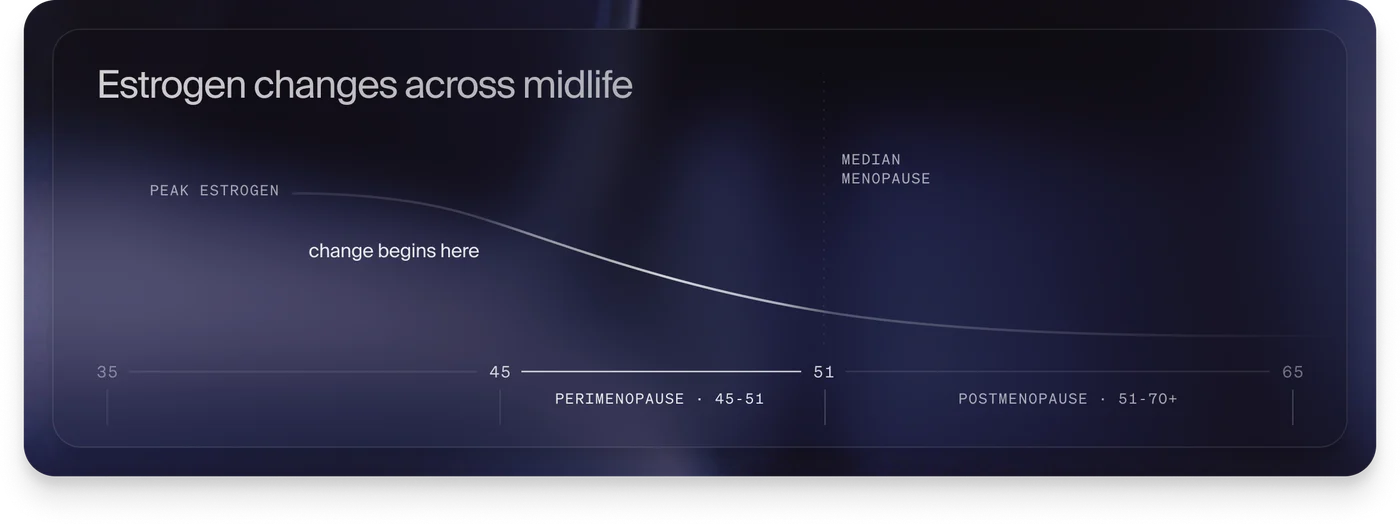
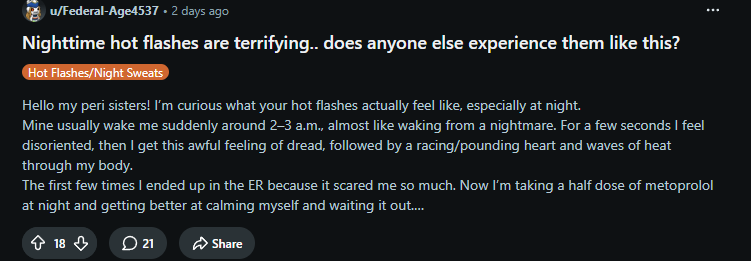
Better Information Is Changing The Hormone Conversation
Hormone therapy has carried a complicated public reputation for decades. If you have heard conflicting messages, your hesitation is understandable.
In November 2025, the FDA requested changes to menopausal hormone therapy labeling. In February 2026, it approved changes for an initial group of six products, removing certain cardiovascular, breast-cancer, and dementia risk statements from their boxed warnings. Source: FDA announcement
That development concerns specific menopausal hormone therapies; it is not FDA approval of testosterone for women or a declaration that hormones carry no risks.
The practical takeaway is to ask for a current, individualized explanation. Which treatment is being discussed? For which symptom? What does your history mean for the benefits and risks?
You deserve more than an old headline in either direction.
A changing hormone conversation
How Menopause Therapy Labeling Changed
- 2002Women’s Health Initiative findings shape the public conversation about hormone therapy.
- November 2025FDA requests changes to certain menopausal hormone therapy warnings.
- February 2026FDA approves revised labeling for an initial group of six products.
Before You Choose A Provider, Look Beyond The Promise
Once you begin researching treatment, it is easy to focus on the product.
Cream or another formulation? How often? What price?
Those are useful questions. But the quality of the decision before treatment—and the care after it—deserve just as much attention.
Ask who will evaluate you. Ask what information they need. Ask how testing will be used, how questions are handled, and what happens if the first plan does not suit you.
Then ask about the financial arrangement in plain language.
What does the consultation cost? Is medication separate? Which follow-up services are included? Is membership optional? What are the renewal terms for the particular offer you choose?
You should not have to piece those answers together after deciding to proceed.
The lowest advertised number is only useful when you understand what it buys. A larger package only makes sense when its services are services you want.
Choose the care and the payment arrangement that fit your needs.
Where Healthspan Fits
Healthspan offers testosterone cream formulated for women, with prescription treatment subject to clinical evaluation. Its published treatment information describes low-dose testosterone delivered through the skin. Source: Healthspan testosterone cream
For a woman researching this option, the appeal is straightforward: a place to discuss testosterone specifically, understand whether it is appropriate, and consider a formulation designed for female dosing.
You can ask the questions that brought you here without pretending you have already made up your mind.
Healthspan also offers ways to access care without joining a membership. Under applicable offers, you can pay for a consultation and, if clinically appropriate, receive a prescription. Optional membership offers benefits such as reduced medication rates.
That gives you a choice about the commercial arrangement while leaving the medical decision where it belongs—with an assessment of your individual situation.
“I Was Very Close To Giving Up Hope.”
Sometimes the most meaningful thing a patient shares is how she felt before she found care. The review below was supplied by Healthspan and is featured on its women’s hormone-care page.
Program figures from Healthspan. Your clinician determines your testing; included panels and follow-up vary by offer.
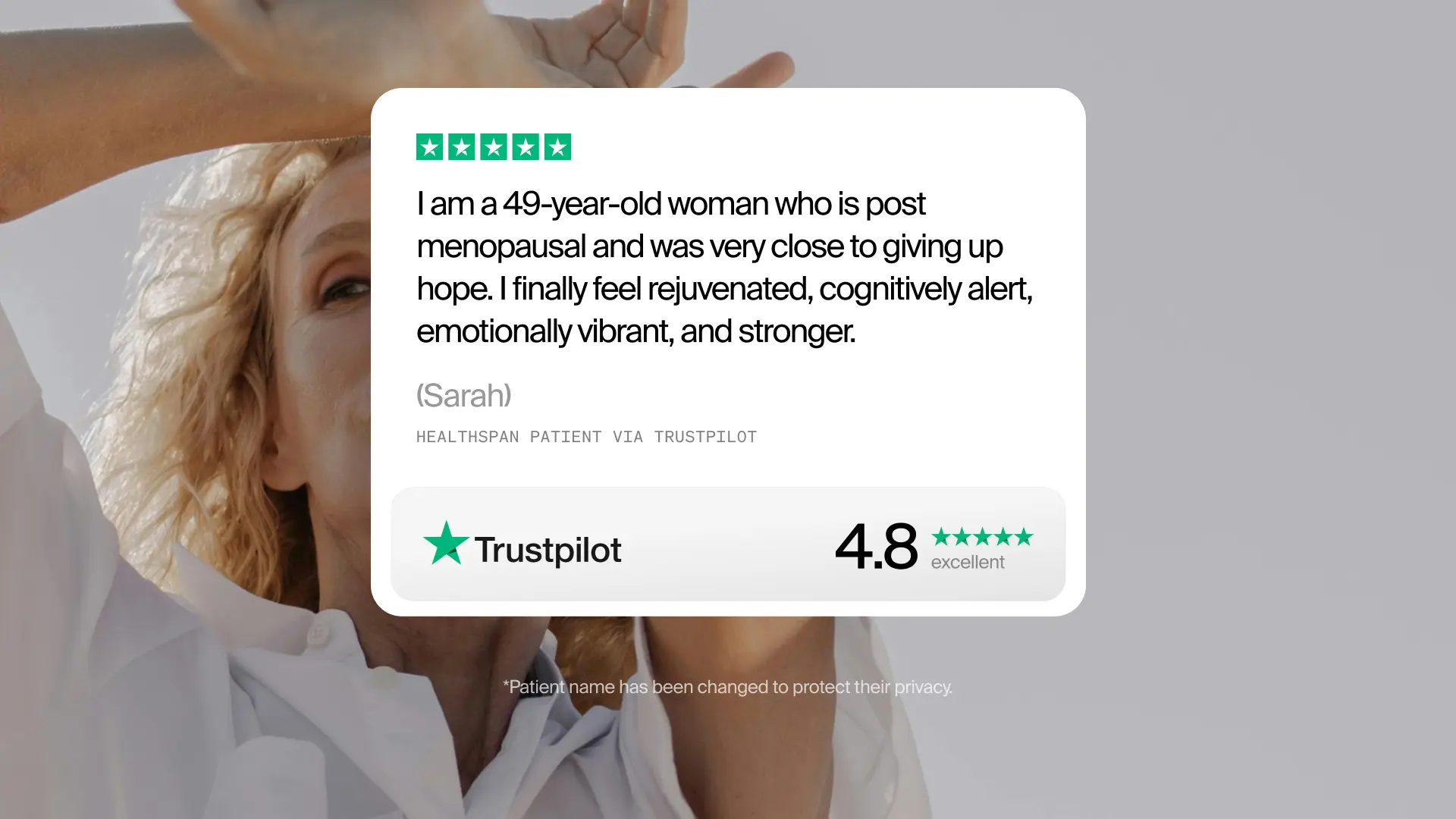
“I am a 49-year-old woman who is post menopausal and was very close to giving up hope. I finally feel rejuvenated, cognitively alert, emotionally vibrant, and stronger.”
Sarah* · Healthspan patient via Trustpilot*Patient name has been changed to protect their privacy. Individual results vary.This is one patient’s experience with Healthspan, not a promise of results or an account attributed specifically to testosterone treatment.
People behind the protocol
The Team Behind Your Care
From the panels you run to the plan you build together.

Licensed Clinicians
Physicians, nurse practitioners, and physician assistants licensed in your state. Medical decisions belong to your clinician.

Women’s Health Experts
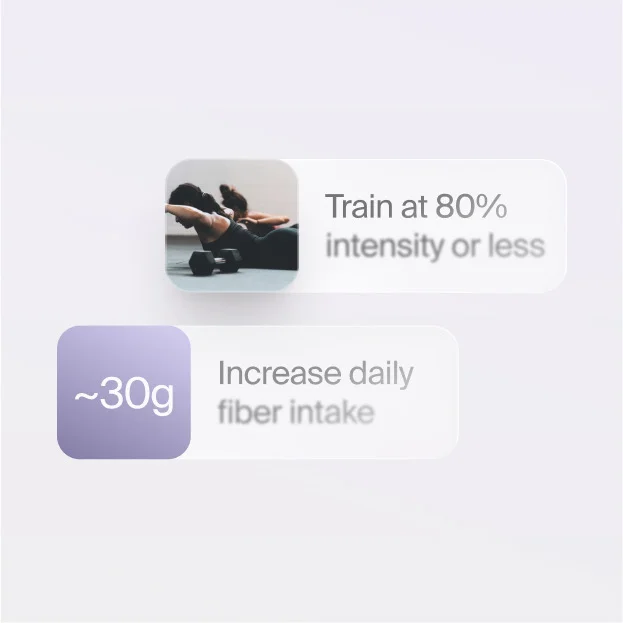
Coaching on nutrition, movement, and sleep, with attention to your symptoms and goals.

A Research-Led Team
Healthspan reports 150+ published works in aging research.
Care That Follows Through
Follow-up labs, symptom tracking, and support. Services depend on your selected care plan.
Healthspan program imagery is illustrative; these images do not identify your assigned care team.
Seven Reasons To Consider Healthspan
- A specific option for women. Testosterone cream is part of Healthspan’s offering, so you can explore the treatment that prompted your questions.
- A consultation before a decision. An opportunity to discuss your concerns and whether prescription care makes sense for you.
- Cream formulated for female dosing. A topical treatment option your clinician can explain in the context of your needs.
- Access without mandatory membership. Consultation-and-prescription offers are available without joining a membership, subject to eligibility and the selected offer.
- Optional savings through membership. If membership suits you, reduced medication rates are among its available benefits.
- A choice you can compare. Review the consultation, medication, and follow-up terms for the offer you are considering before proceeding.
- A focused next step. Move from researching the same question to discussing it with a clinician who can assess your situation.
Why Cream Is Part Of This Conversation
Sometimes the treatment you have been picturing turns out to be different from the option actually being discussed.
Healthspan’s offering is a topical cream. The conversation is about a prescribed amount for a woman, rather than taking a standard men’s dose. Your clinician should explain the formulation, application instructions, and monitoring before you begin. Source: Healthspan testosterone cream
That is also the time to ask practical questions.
Where would it fit into your routine? What should you do if you miss an application? How do you prevent skin contact from exposing someone else? Which changes should prompt a call?
Being comfortable with the routine matters. So does knowing you can raise a concern without feeling that you have somehow failed at treatment.
For testosterone therapy, professional guidance calls for baseline assessment and follow-up testing, including an early level check after starting. Monitoring helps assess exposure and guide decisions; it is not a substitute for asking whether your symptoms are improving. Source: ISSWSH clinical guideline
Whether you choose a membership or a consultation-based offer, clarify how the medically necessary follow-up will be arranged and paid for.
Peace Of Mind In Three Steps
You do not have to settle every question before contacting Healthspan. Finding out which questions matter is part of seeking care.

Intake And Baseline Labs
Begin with your symptom intake, followed by a baseline hormone panel at a partner lab.

Care Team Visit
A licensed clinician reviews your results alongside your symptoms and health history.
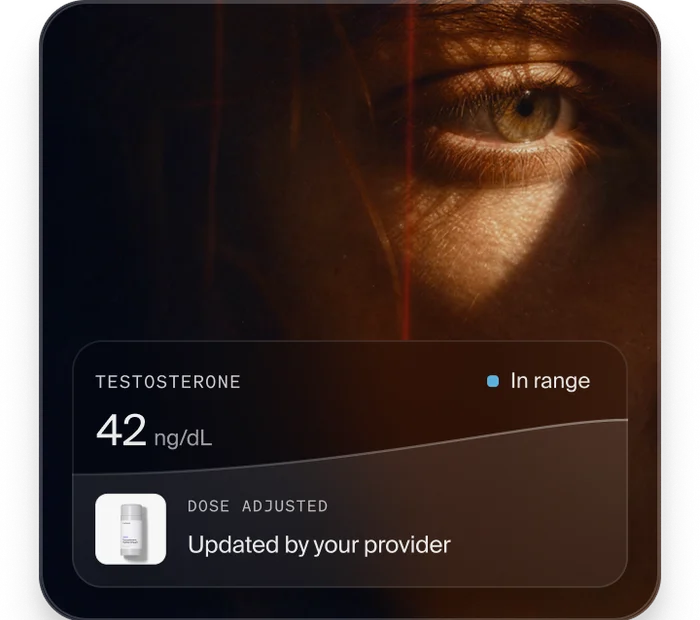
Your Protocol, Tuned Over Time
A plan based on your results, with follow-up testing and adjustments as clinically appropriate.
Healthspan’s program pathway. Testing, follow-up timing, and included services depend on your clinical needs and selected offer. Images are illustrative.
Notice what you are being asked to decide first: whether you want a more informed conversation.
You are not being asked to diagnose yourself from an article. You are not expected to know which result on a lab report matters most. You do not need to arrive convinced that testosterone is the answer.
You can simply arrive with a concern that has gone unanswered.
The consultation is where that concern can become a clearer set of options.
For readers ready to explore their options, Healthspan is offering 50% off the first step.
Your next step
Take The First Step.
Receive 50% Off.
Consultation. Labs. Prescription, if appropriate.
Labs, clinician review, your personalized protocol and 1:1 coaching—starting with a one-time consultation.
START ASSESSMENTDiscount automatically applied. No code needed.
Prescription subject to clinical eligibility. Membership optional.
Consultation-based options available · Membership optional · Prescription subject to clinical eligibility
Four Questions Worth Answering Before You Start
Could testosterone change my appearance or voice?
Acne and increased facial or body hair can occur. Excessive exposure can cause more serious changes, including voice deepening that may be irreversible. Follow the prescribed instructions and report unwanted changes promptly. Ask your clinician how dosing and monitoring will address these risks. Source: Healthspan’s treatment guide
Will a blood test tell me whether I need testosterone?
A testosterone level alone cannot diagnose HSDD or establish that treatment is appropriate. Your symptoms, history, and other possible contributors matter. Testing is part of assessment and monitoring, rather than an automatic reason to prescribe. Source: Global Consensus Position Statement
Do I have to join a Healthspan membership?
No. Healthspan has consultation-and-prescription offers that do not require membership. A prescription depends on clinical eligibility. Membership is optional and may provide benefits such as reduced medication rates. Check the consultation, medication, laboratory, and follow-up costs associated with your chosen offer.
Is testosterone cream FDA-approved for women?
There is no FDA-approved testosterone product specifically for women in the United States. Prescribing for women is off-label. Compounded drugs are not FDA-approved, and FDA does not review their safety, effectiveness, or quality before marketing. Ask your clinician about the proposed formulation and alternatives. Sources: Healthspan treatment guide, FDA on compounded drugs
You Are Allowed To Want An Answer
There may be no single moment when you decide a change has become important enough to address.
Instead, there are small reminders. Another evening when you feel distant. Another conversation you put off. Another search you start and abandon because the answers seem either too vague or too certain.
You can choose a different next step.
Write down the concern. Ask the question. Find out whether testosterone cream is an appropriate option for you—and what other explanations need attention if it is not.
The goal is a decision you understand and care you choose with confidence.
Healthspan offers a way to begin that conversation, including consultation-based options without mandatory membership.
If this change matters to you, it deserves a place in your healthcare.
Your next step
Take The First Step.
Receive 50% Off.
Consultation. Labs. Prescription, if appropriate.
Labs, clinician review, your personalized protocol and 1:1 coaching—starting with a one-time consultation.
START ASSESSMENTDiscount automatically applied. No code needed.
Prescription subject to clinical eligibility. Membership optional.

Sources & clinical context
Clinical references are cited beside the relevant statements throughout this article.
- Global Consensus Position Statement on Testosterone Therapy for Women
- ISSWSH clinical practice guideline
- The Menopause Society: Sexual Health
- FDA: February 2026 menopause therapy labeling update
- FDA: Understanding the Risks of Compounded Drugs
The headline frames the topic; symptoms alone do not establish a testosterone deficiency. A blood level alone does not determine treatment candidacy. Evidence is strongest for postmenopausal HSDD, not general fatigue.
This page provides general information, not personal medical advice. Treatment requires evaluation by a licensed clinician and is not appropriate for everyone. Results vary. Testosterone use in women is off-label. Compounded medications are not FDA-approved. Discuss benefits, risks, alternatives, and monitoring with your clinician. Medication and ongoing care terms are provided by Healthspan.